Ctrl K
Thalia Painter was an Athenian vase painter active in the late Archaic period, roughly 520–500 BCE. Working exclusively in the red-figure technique on drinking cups (kylikes), he belonged to the vibrant tradition of Attic pottery production centered in Athens. His conventional name derives from the inscription “Thalia” that appears on one of his most characteristic works, a bilingual cup found at Vulci and now divided between the Antikensammlung in Berlin and the Archaeological Museum in Florence. The figure labeled Thalia is shown in an intimate erotic scene, a subject that recurs among his attributed pieces.
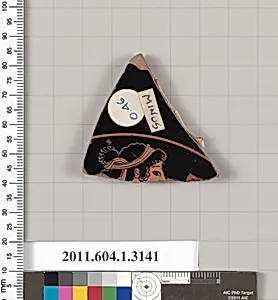
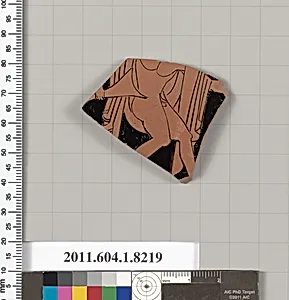
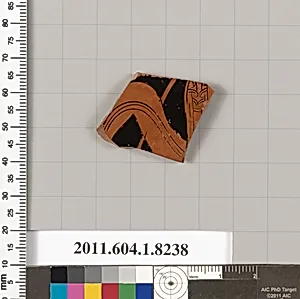
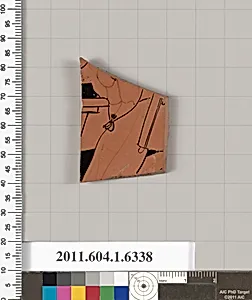
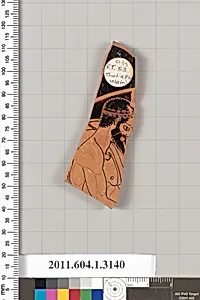
His style is marked by fluid, economical drawing and a preference for lively, often intimate compositions suited to the circular fields of cup interiors and exteriors. Subjects range from Dionysiac revels and processions of maenads and satyrs to athletic scenes, warriors, and groups of komasts. One bilingual example combines a black-figure tondo with red-figure exterior decoration, illustrating the transitional techniques of the period. Attributions also include fragments in the Metropolitan Museum of Art and other museum collections, bringing the total of securely attributed works to around five.
Although nothing is known of his training or personal life, Thalia Painter’s output reflects the broader artistic milieu of late sixth-century Athens, where red-figure pioneers were experimenting with new ways to render anatomy, drapery, and narrative. His cups have been found at sites in Etruria and on the Athenian Acropolis, underscoring the export success of Attic pottery. Today his vases contribute to our understanding of the rapid stylistic evolution that led into the early Classical period, offering vivid glimpses of Athenian social and mythological life preserved on fragile terracotta.