Ctrl K
1718–1779
Thomas Chippendale, baptized on June 5, 1718, in Otley, Yorkshire, was born into a family steeped in woodworking traditions, the only child of joiner John Chippendale and Mary Drake. His father likely provided his initial hands-on training in cabinetmaking, supplemented by time in the workshop of York joiner Richard Wood, before Chippendale relocated to London around 1749. He married Catherine Redshaw that year, fathering nine children including eldest son Thomas Chippendale the younger, who later took over the family firm; after her death in 1772, he wed Elizabeth Davis in 1777. Establishing his workshop at 60–62 St. Martin's Lane by 1754, Chippendale built a thriving enterprise that blended craftsmanship with innovative design.
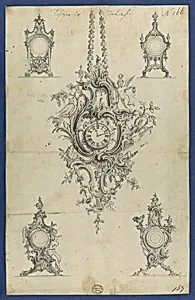
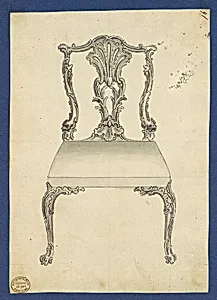
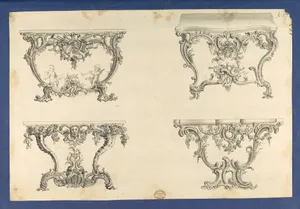
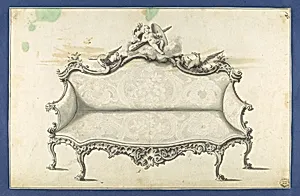
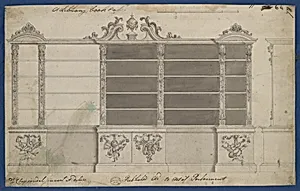
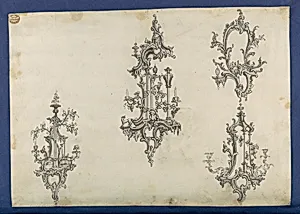
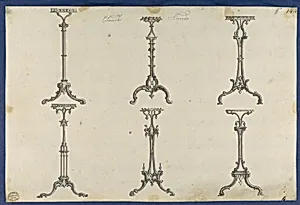
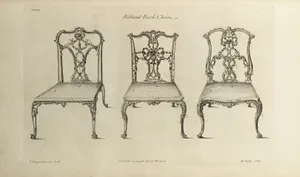
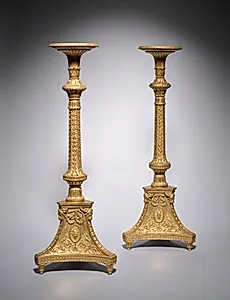
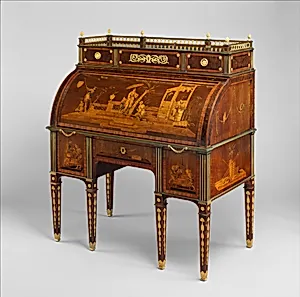
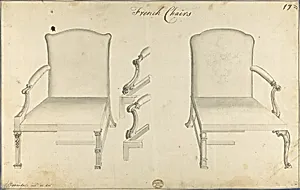
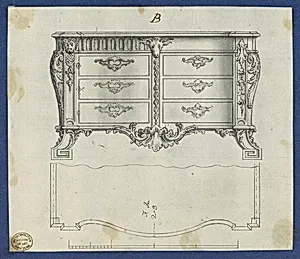
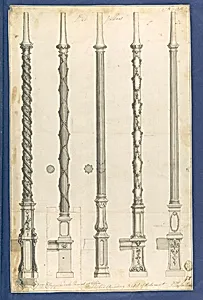
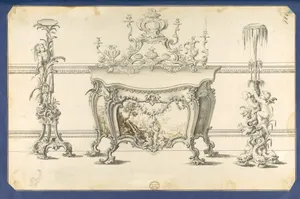
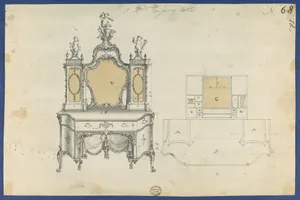
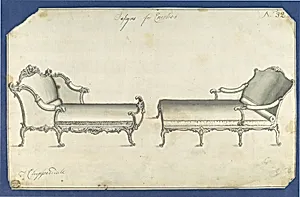
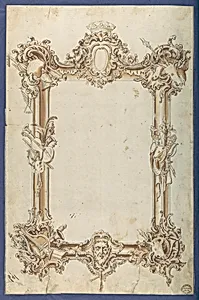
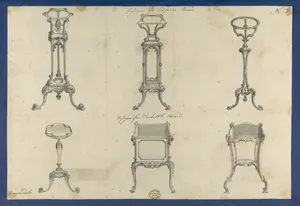
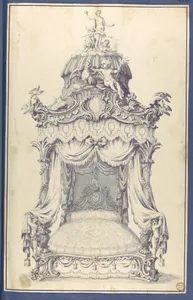
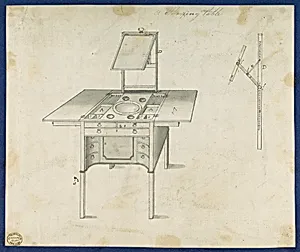
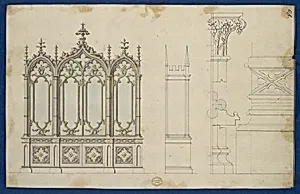
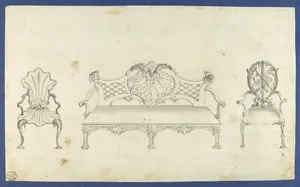
Chippendale's artistry spanned mid-Georgian Rococo, Chinese-inspired motifs, Gothic elements, and later Neoclassical styles, often executed in mahogany with intricate carving and piercing. His seminal publication, *The Gentleman and Cabinet-Maker's Director* (1754, with expanded editions in 1755 and 1762), revolutionized the trade as the first comprehensive furniture design catalog, featuring 161 engraved plates of chairs, tables, cabinets, and more in eclectic tastes—French Rococo flourishes, fretted Chinese latticework, and pointed Gothic arches. Influenced by architects like Robert Adam from the 1760s, he supplied complete interiors, including upholstery and decor, adapting to aristocratic whims while elevating British furniture fashion.
Among his grandest commissions were furnishings for Harewood House (1767–78) for Edwin Lascelles, Nostell Priory (1766–85) for Sir Rowland Winn, Dumfries House (1759) for the Earl of Dumfries, and Paxton House (1774–91), where much of the opulent Rococo and Neoclassical furniture survives today. He collaborated on Adam-designed schemes at Wilton House and others, amassing bills exceeding £10,000 for some clients.
Chippendale's legacy endures through his Director's global dissemination—to America, Europe, and even Catherine the Great's court—making "Chippendale" synonymous with elegant 18th-century furniture. Dying of tuberculosis in 1779, he left a firm continued by his son until 1822, cementing his role as a pivotal figure in design history whose versatile genius bridged Rococo exuberance and Neoclassical restraint.
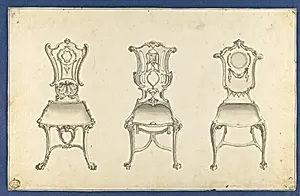
![Gothick [Gothic] Chairs, in Chippendale Drawings, Vol. I](https://images.artheonmuseum.org/met/dp/thumb/gothick-gothic-chairs-in-chippendale-drawings-vol-i-390500.webp)