Ctrl K
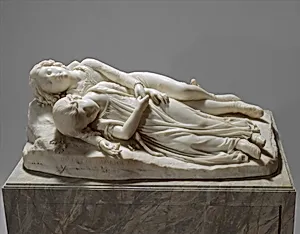
1813–1857
**Thomas Crawford (1814–1857)** was a leading American neoclassical sculptor whose monumental works helped shape the artistic identity of the United States Capitol. Born Thomas Gibson Crawford in New York City on March 22, 1814, he began his artistic training by studying drawing at the National Academy of Design and learning wood carving and stonecutting in the studio of John Frazee and Robert Launitz. In 1835 he traveled to Rome, where he established a permanent studio and received instruction from the renowned Danish neoclassical sculptor Bertel Thorvaldsen.
Crawford remained based in Rome for the rest of his life, working firmly within the neoclassical tradition while maintaining strong ties to American patrons and institutions. He married Louisa Cutler Ward in 1844; the couple had four children, including the novelist Francis Marion Crawford and the writer Mary Crawford Fraser. His reputation grew through exhibitions such as a solo show at the Boston Athenaeum in 1844, and he received major commissions from the U.S. government in the 1850s for the expanding Capitol complex.
Among his most significant contributions are the plaster model for the colossal *Statue of Freedom* (completed shortly before his death and installed atop the Capitol dome in 1863), the 80-foot pediment sculpture *Progress of Civilization* for the Senate wing, and the pediment *Justice and History* above the Senate doors, which he also designed. These works exemplify his mastery of grand allegorical and historical themes executed on an architectural scale.)
Crawford died suddenly in London on October 10, 1857, at age 43, before seeing his Capitol projects fully realized. At the time of his death his stature rivaled that of contemporaries Hiram Powers and Horatio Greenough, and his influence on the visual character of the nation’s most important public building endures. His neoclassical vision continues to define key elements of American civic art.