Ctrl K
1814–1914
**Thomas E. Barratt** (born ca. 1814 in England) was a British-born miniaturist and portrait painter who spent much of his career in the United States. He emigrated after 1833 and established himself in Philadelphia, where he became active as a painter of small-scale portraits, often executed in watercolor on ivory.
Barratt specialized in intimate, finely detailed likenesses that captured the sitters’ features with precision and delicacy. His works reflect the enduring popularity of miniature portraiture in the early nineteenth century, a medium prized for its portability and personal significance. He exhibited at the Artists’ Fund Society and the Pennsylvania Academy of the Fine Arts, gaining recognition among Philadelphia’s artistic community.
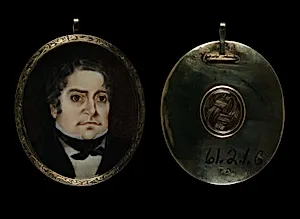
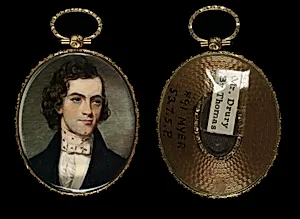
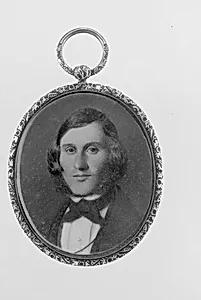
Among his surviving works are a *Portrait of a Gentleman* (ca. 1840, Metropolitan Museum of Art), *Henry Smith*, and *Mr. Drury* (ca. 1850, Smithsonian American Art Museum). These pieces demonstrate his skill in rendering clothing, expressions, and subtle tonal gradations within the constrained oval format typical of miniatures.
Barratt’s documented activity ceases after the mid-1850s; he is believed to have died in the United States sometime after 1854. Though his output was modest, his portraits preserve a vivid record of mid-nineteenth-century sitters and exemplify the transatlantic exchange of artistic traditions between Britain and America. His works continue to be held in major public collections, offering insight into the refined craft of miniature painting.
All 3 artworks loaded