Ctrl K
1802–1842
Thomas Fearnley was a leading Norwegian Romantic painter, born on 27 December 1802 in Frederikshald (now Halden) to merchant Thomas Fearnley and Maren Sophie Paus, whose family belonged to the prominent Paus lineage of Telemark. His grandfather had immigrated from Yorkshire, England. Sent at age five to live with an aunt in Christiania (Oslo), he first studied drawing at the Royal Drawing School from 1819 to 1821 before attending the Art Academy in Copenhagen (1821–1823) as a pupil of C.W. Eckersberg and then the Royal Academy in Stockholm (1823–1827) under Carl Johan Fahlcrantz. A study tour through Norway in 1826 brought him face to face with Johan Christian Dahl in Sogn, an encounter that redirected his art toward direct, truthful observation of nature.
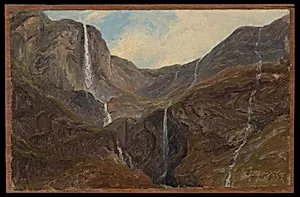
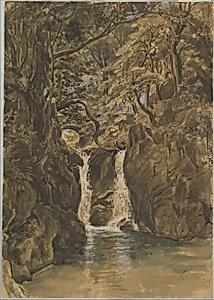
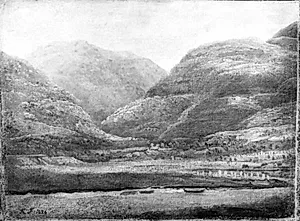
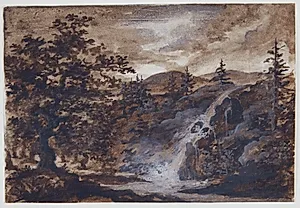
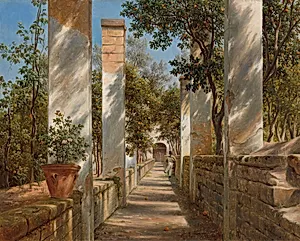
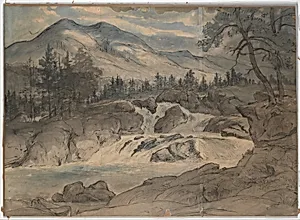
Fearnley became Dahl’s student in Dresden from 1829 to 1830 and emerged as a central figure of Norwegian romantic nationalism. He produced both fresh plein-air oil sketches and large, coolly monumental studio landscapes that emphasized the architectural structure of wilderness, waterfalls, and glaciers. Influenced by Dahl, Caspar David Friedrich, John Constable, and J.M.W. Turner—whom he depicted at work during a 1837 stay in London—he traveled restlessly across Italy, Switzerland, France, England, and Norway, capturing the sublime drama of mountains and fjords with a distinctive blend of realism and romantic grandeur.
His finest achievements include Labrofossen (The Labro Falls, 1837), Grindelwaldgletsjeren (The Grindelwald Glacier, 1838), and Slinde Birken (The Old Birch Tree at the Sognefjord, 1839), works that remain highlights of the National Gallery in Oslo, which holds dozens of his paintings, sketches, and drawings. These pictures combine a taste for the powerful and wildly romantic with precise compositional control, making Fearnley, alongside Dahl, Norway’s most significant landscape painter of the decades after 1814.
In 1840 he married Cecilie Catharine Andresen; their only child, Thomas Nicolay Fearnley, later founded a major shipping dynasty whose descendants established the Astrup Fearnley Museum. Fearnley died of typhoid fever in Munich on 16 January 1842 at the age of thirty-nine. Though his career was brief, his vivid, architecturally structured visions of Nordic and Alpine nature secured his lasting place in European Romantic painting.