Ctrl K
1795–1880
**Thomas Landseer** (1795–1880) was a British engraver and etcher renowned for his masterful reproductions of his younger brother Edwin Landseer’s animal paintings, which helped popularize the latter’s work across Victorian Britain. Born in London as the eldest of fourteen children to engraver John Landseer and actress Jane Potts, Thomas was one of only seven siblings to reach adulthood; his brothers Charles and Edwin both became prominent painters and Royal Academicians. Like his father, he was deaf from birth. He was the only Landseer sibling to marry, wedding Belinda, and their son George Landseer later worked as a portrait and landscape painter.
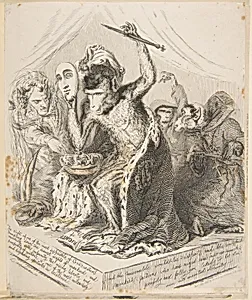
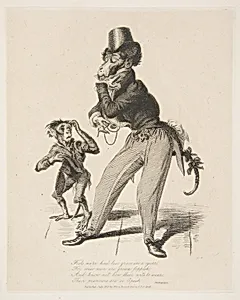
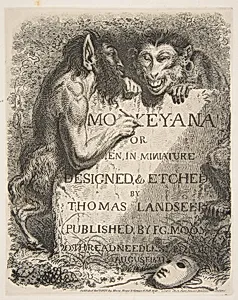
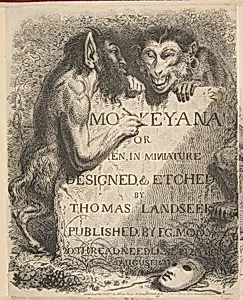
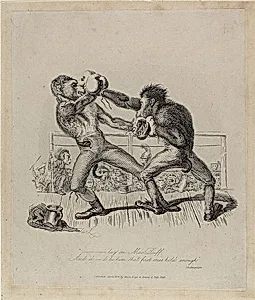
Landseer received his initial artistic training from his father and later studied under the painter Benjamin Robert Haydon alongside his brother Charles and William Bewick. He began etching at age fourteen, initially copying his precocious younger brother Edwin’s drawings. This early practice evolved into a lifelong specialization in translating Edwin’s vibrant animal scenes into print, employing innovative soft-ground etching techniques that captured textures of fur and hide with remarkable freedom and sympathy. He also created original works, including satirical etchings of monkeys in human attire for *Monkeyana, or Men in Miniature* (1827), illustrations for Samuel Taylor Coleridge’s *The Devil’s Walk* (1831), and *Characteristic Sketches of Animals* (1832), dedicated to the Zoological Society. He exhibited paintings at the British Institution and Royal Academy and assisted his brother in giving art lessons to Queen Victoria and Prince Albert.
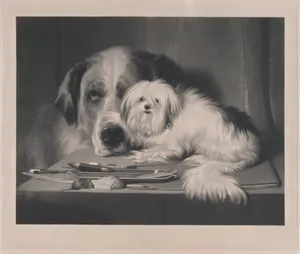
Among his most celebrated engravings after Edwin are *Dignity and Impudence* (1841), *Alexander and Diogenes* (1852), *The Monarch of the Glen* (1852), and his final plate, *The Font* (1875). He produced over 125 such works, which sold widely and generated significant income for the family. Elected an Associate of the Royal Academy (ARA) in 1867 for his contributions to etching, Landseer also edited the 1871 biography *The Life and Letters of William Bewick*. He died on 20 January 1880 at his home in St. John’s Wood and was buried at Highgate Cemetery.
Thomas Landseer’s legacy lies in his technical innovation and pivotal role in disseminating Edwin’s art through affordable, high-quality prints, ensuring the Landseer name became synonymous with Victorian animal painting. His own original etchings and writings further enriched 19th-century British printmaking.