
Ctrl K
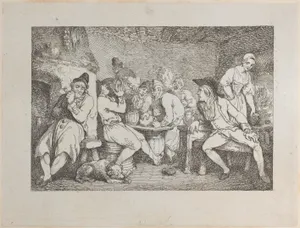
**Thomas Rowlandson** (1757–1827) was a leading English artist and caricaturist of the Georgian era, celebrated for his witty depictions of social life, political satire, and everyday scenes in late 18th- and early 19th-century Britain. Born in London on 13 July 1757 to a family that faced financial hardship, he grew up in the City of London before moving briefly to Yorkshire. His early talent for drawing humorous characters emerged during his school years.
Rowlandson received his artistic training at the Soho Academy run by Dr. Cuthbert Barwis and later studied at the Royal Academy Schools starting around 1772, after a period in Paris where he honed his skills in figure drawing. He spent several years at the Royal Academy, exhibiting works and earning a silver medal in 1777. Though he initially pursued portraiture and landscapes, financial pressures and the influence of contemporaries like James Gillray steered him toward caricature and printmaking as a livelihood.
His artistic style combined fluid reed-pen outlines with delicate watercolor washes, often etched by the artist himself and hand-colored. Rowlandson excelled at capturing the vibrancy and absurdities of Georgian society—pleasure gardens like Vauxhall, election campaigns, medical quacks, and the antics of characters in his famous *Dr. Syntax* series (beginning with *The Tour of Dr. Syntax in Search of the Picturesque* in 1812, in collaboration with William Combe). He also illustrated works by authors including Tobias Smollett, Oliver Goldsmith, and Laurence Sterne, and produced the *English Dance of Death* (1815–16). His output was enormous, with estimates of at least 10,000 drawings, many blending gentle social observation with bawdy humor.
Rowlandson’s legacy endures as one of Britain’s greatest caricaturists, whose acute eye documented the customs, fashions, and follies of his age with unmatched liveliness. His prints and drawings remain prized for their technical ease and historical insight, influencing later generations of illustrators and providing a vivid visual record of Regency-era life. He died in London on 21 April 1827.
All 1 artworks loaded