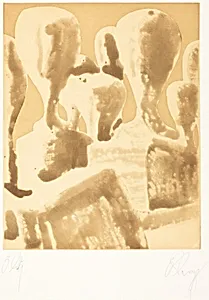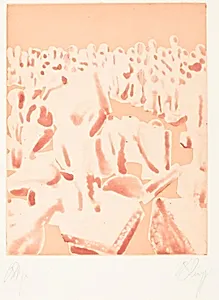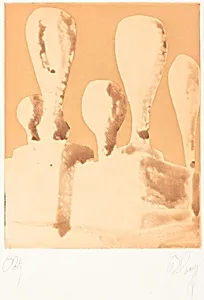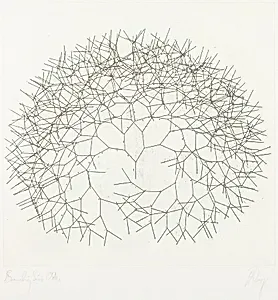
Sir Tony Cragg (b. 1949) is a British sculptor whose career, spanning more than five decades, has traced a remarkable arc from early assemblages of found industrial materials to large-scale works of virtuosic formal invention in bronze, steel, glass, and wood. Born in Liverpool, Cragg worked as a laboratory technician for the British Rubber Producers Research Association before pursuing formal art training at Gloucestershire College of Arts and Technology (1968–70), the Wimbledon School of Art (1970–73), and the Royal College of Art in London, where he completed an MA in sculpture in 1977. That same year he moved to Wuppertal in Germany, where he has remained ever since.
Cragg first came to international attention in the late 1970s and early 1980s with installations and reliefs composed of fragments of discarded consumer objects arranged on gallery walls and floors to form larger recognizable images. Britain Seen from the North (1981), a signature work of this period now in the collection of the Tate, reassembles multicolored plastic scraps into a map of Britain, implicating consumer culture and national identity in the same gesture. In 1988 he was awarded the Turner Prize at the Tate Gallery, a recognition that marked his arrival at the center of British contemporary art. That same year he represented Britain at the Venice Biennale and was appointed Professor at the Kunstakademie Düsseldorf, a position he held until 2001.
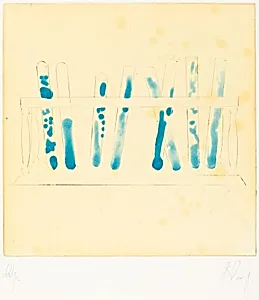
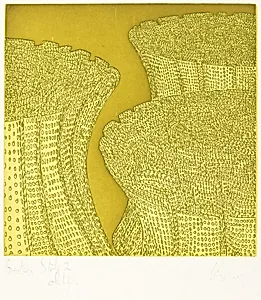
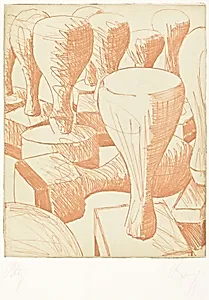
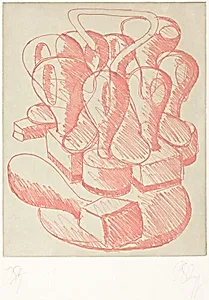
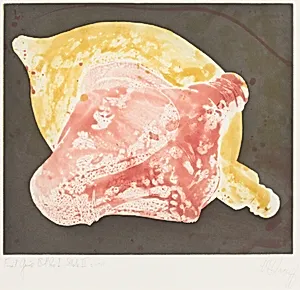
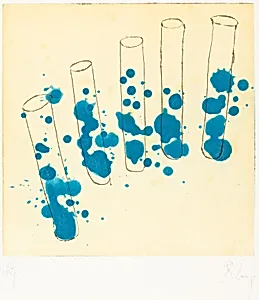
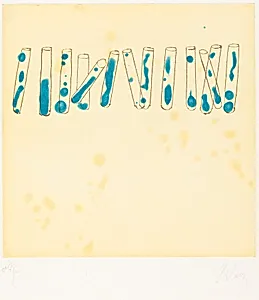
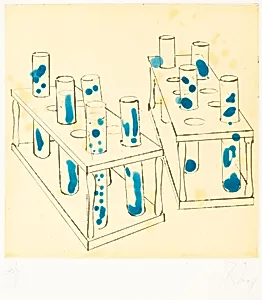
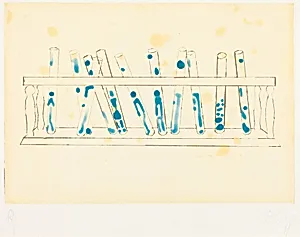
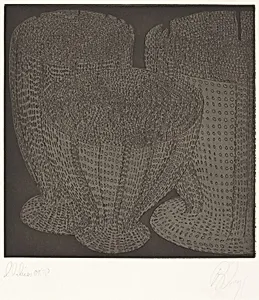
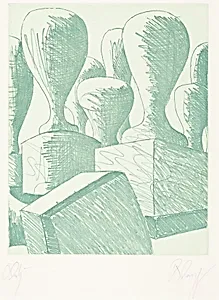
In subsequent decades Cragg's sculpture evolved toward more formally complex and organically fluid forms. His ongoing series Early Forms and Rational Beings explore the sculptural possibilities latent in everyday vessels and containers — chemistry flasks, bottles, mortars — pushing their surfaces and volumes through contortions that generate new, independent forms suggestive of biological processes and human presence. He founded the Cragg Foundation in 2005 and established the Waldfrieden Sculpture Park in Wuppertal, where large-scale works are displayed in a forested setting. He was appointed CBE in 2002, knighted in 2016, and received the Praemium Imperiale for sculpture from the Japan Art Association in 2007. His work is held in major collections worldwide and he remains one of the most prolific and intellectually rigorous sculptors of his generation.