Ctrl K
1839–1892
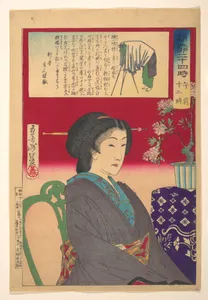
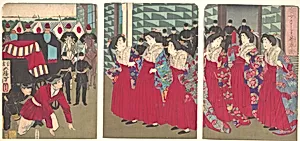
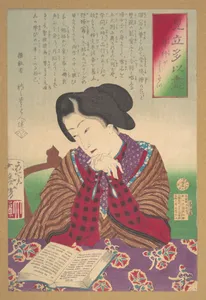
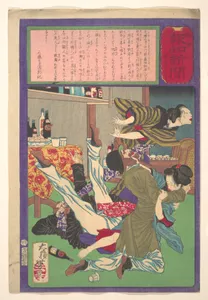
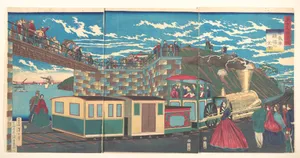
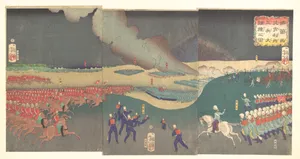
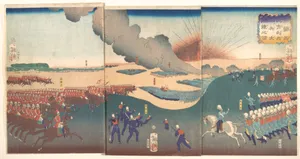
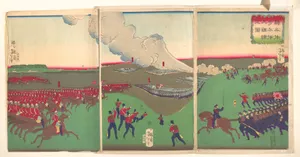
Tsukioka Yoshitoshi was born on April 30, 1839, in the Shimbashi district of Edo, the city that would become Tokyo. At the age of eleven he was apprenticed to Utagawa Kuniyoshi, one of the great masters of the Japanese woodblock print, who gave the boy the artist name 'Yoshitoshi' as a mark of lineage within the Utagawa School. From Kuniyoshi, Yoshitoshi absorbed the full tradition of ukiyo-e — the genre of genre painting and printing depicting the 'floating world' of actors, courtesans, landscapes, and historical subjects — even as the entire art form was under pressure from Western imports and photography following the Meiji Restoration of 1868.
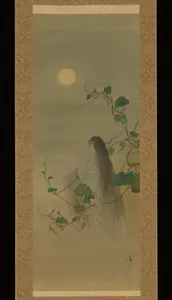
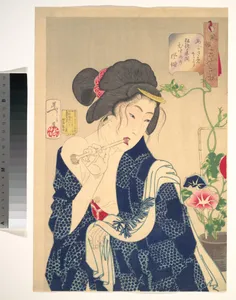
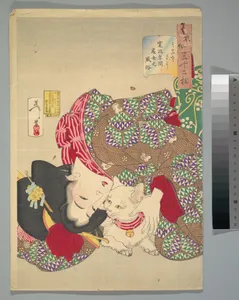
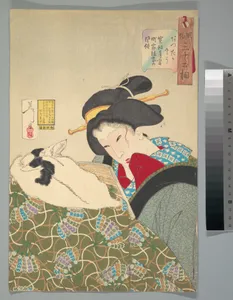
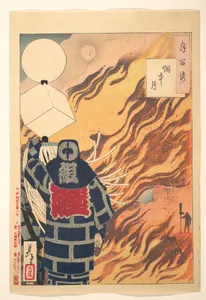
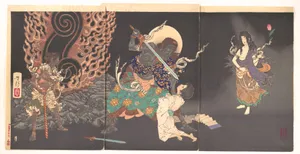
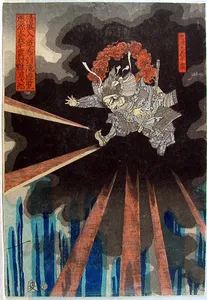
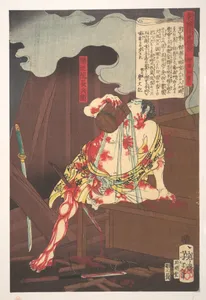
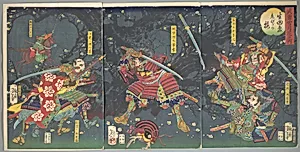
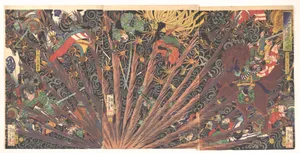
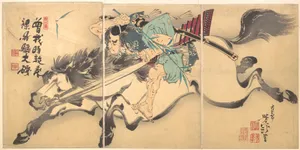
Yoshitoshi's career began during the turbulent final years of the Edo period and extended into the modernizing Meiji era, giving his work a quality of profound historical tension. In 1866–1869 he produced the disturbing series Twenty-Eight Famous Murders with Verse, graphic depictions of violence that earned him early notoriety. He suffered severe depression and a complete breakdown in 1872, yet returned to work with renewed ambition. His later series are among the most admired in all ukiyo-e: Mirror of Famous Generals of Great Japan (1877–1882), the haunting One Hundred Aspects of the Moon (1885–1892), and New Forms of Thirty-Six Ghosts (1889–1892). In these works, Yoshitoshi blended classical Japanese subject matter — ghosts, warriors, women of the courtly tradition — with Western shading techniques and a psychological depth rarely seen in the medium.
Widely recognized as the last great master of ukiyo-e, Yoshitoshi continued producing prints even as Western-style illustration and photography eclipsed traditional woodblock methods. He died on June 9, 1892, in Tokyo, at the age of 53. Largely overlooked for decades after his death, his reputation underwent a significant revival beginning in the 1970s, and he is now celebrated internationally as an artist who gave the ukiyo-e tradition one final, blazing generation of creative life.