
Ctrl K
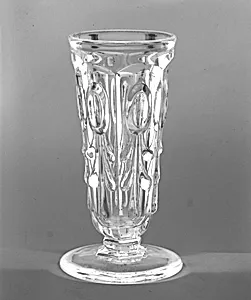
**Union Glass Company** was an American glass manufacturer based in Somerville, Massachusetts, renowned for its contributions to both utilitarian flint glassware and innovative art glass. Established in 1854 by Amory Houghton (1812–1882) of the prominent Houghton family, the company operated at 52 Webster Avenue until its closure in 1924. Houghton had earlier invested in the Bay State Glass Company before founding Union, which began with two nine-pot furnaces producing a wide array of lead (flint) glass items including lamps, bottles, tableware, and windows.
The firm endured financial challenges, including insolvency during the Panic of 1857 and reorganization in the early 1860s, after which the Houghtons sold their interest and later established what became Corning Inc. Under subsequent leadership, including Julian de Cordova from 1893 onward, Union expanded into artistic production. From 1892, it specialized in iridescent and silvered art glass, often in Venetian revival styles, alongside distinctive flower-form vases such as Rose, Morning Glory, Sweet Pea, and Carnation designs marketed to florists.
Among its notable creations was a monumental 150-pound cut-glass punch bowl commissioned by Tiffany & Co., crafted over 110 days by a team of 15 workers and displayed in New York with a price equivalent to roughly $77,000 today. The company’s output reflected adaptations to evolving tastes and economic conditions, distinguishing it in the American glass market through technical skill and aesthetic innovation.
Union Glass Company’s legacy lies in its role as a significant producer of art glass during America’s Gilded Age and early 20th century, bridging industrial manufacturing with fine decorative arts. Its history connects directly to broader developments in American glassmaking, as the Houghton family’s ventures helped lay foundations for major enterprises like Corning. Though the firm closed in 1924, surviving examples of its iridescent and cut-glass works continue to be valued by collectors and museums for their craftsmanship and historical importance.