Ctrl K
1830–1852
Occupations
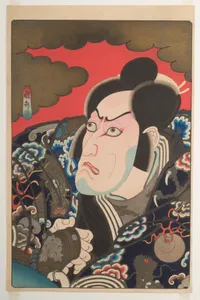
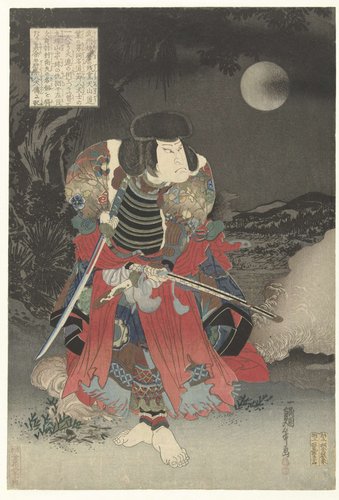
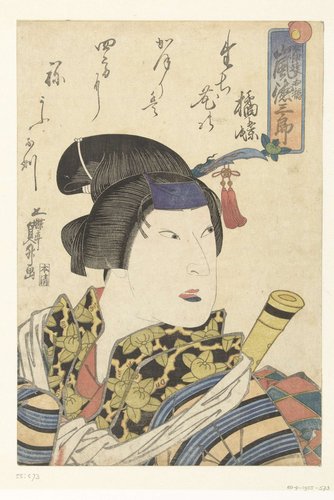
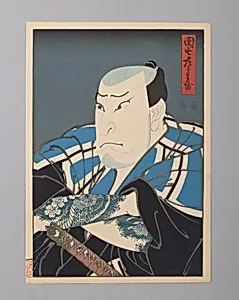
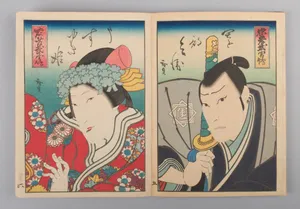
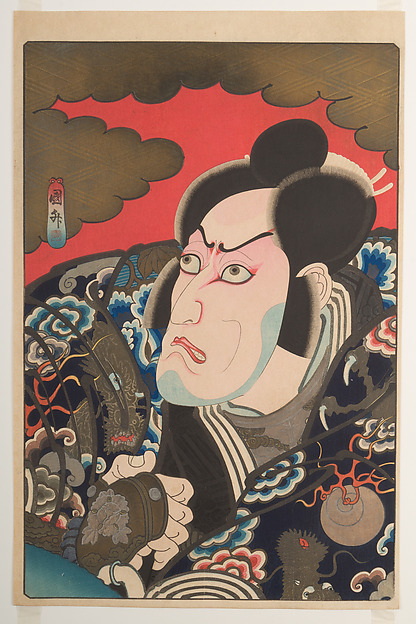
Utagawa Kunimasu was a prominent ukiyo-e designer and teacher active in Osaka during the late Edo period, whose greatest artistic achievement was advancing the mature Osaka style of ōkubi-e (actor bust portraits) in the chūban format. A moneyed property owner who enjoyed considerable financial freedom, Kunimasu used his resources to promote ukiyo-e and its producers within Osaka, becoming an influential figure on the city's art scene. Originally trained in Edo under the renowned Utagawa Kunisada, Kunimasu returned to Osaka to become one of the leading producers of kamigata-e—prints from the Osaka and Kyoto regions—specializing in yakusha-e actor prints that documented kabuki theater's vibrant culture. Kunimasu's innovations included popularizing the chūban format for actor portraits and developing sophisticated close-up compositions beginning around 1837-1840. Beyond his artistic production, he played a pivotal role as teacher and patron, with notable students including Hirosada Konishi and Sadanobu Hasegawa emerging from his studio. In 1852, Kunimasu visited Edo with his student Hirosada, collaborating with other pupils of Kunisada on background designs for half-length actor portraits. Soon after returning to Osaka, however, Kunimasu abandoned ukiyo-e to pursue painting in the Shijō school style, ending his printmaking career but continuing artistic production in a different medium until his later years.
Kunimasu studied under Utagawa Kunisada in Edo (modern Tokyo), one of the most successful and prolific ukiyo-e designers of the nineteenth century. Kunisada's workshop provided comprehensive training in figure drawing, composition, and the commercial aspects of print production.
Kunimasu's earliest known print, signed 'eshi Utagawa Sadamasu ga,' dates to the early 1830s, indicating he had completed his training and begun independent production. The name Sadamasu represents his early artistic identity, which he later changed to Kunimasu around 1846 in homage to Kunisada, who had adopted the prestigious name Toyokuni in 1844.
Unlike most ukiyo-e artists who depended entirely on print sales for income, Kunimasu was a property owner with independent wealth. This financial security allowed him greater artistic freedom and enabled him to support Osaka's ukiyo-e community through patronage and teaching.
Kunimasu became a leading figure in Osaka's ukiyo-e production, specializing in kamigata-e, the distinctive prints produced in the Osaka-Kyoto region. His primary subject was yakusha-e—actor prints documenting kabuki theater performances and portraying popular actors in their signature roles.
Around 1837, Kunimasu created his first ōkubi-e (bust portraits) in the chūban format, pioneering close-up actor portraits in this size. He continued experimenting with this format through the 1840s, achieving one of his greatest accomplishments by popularizing the chūban format for actor portraits and advancing the mature Osaka style of such images.
Beyond artistic production, Kunimasu actively promoted Osaka printmaking and directly aided numerous artists' careers. He established a teaching studio where he trained the next generation of kamigata-e designers, with notable students including Hirosada Konishi and Sadanobu Hasegawa.
In 1852, Kunimasu and his student Hirosada visited Edo, where they collaborated with other pupils of Kunisada in creating background designs for a series of half-length actor portraits. This project united Edo and Osaka traditions while demonstrating Kunimasu's continued connection to his teacher's artistic community.
Soon after returning to Osaka from his 1852 Edo visit, Kunimasu made a decisive break with ukiyo-e printmaking. He turned his attention to painting, specifically adopting the Shijō school style, a painting tradition that emphasized naturalistic observation combined with decorative refinement.
This transition from commercial printmaking to painting represented a significant shift in both medium and artistic philosophy. The Shijō school's emphasis on painting from life and nature contrasted with ukiyo-e's conventionalized approaches to figure representation and composition.
Kunimasu's abandonment of printmaking ended his direct involvement in Osaka's commercial print industry, though his influence continued through his students and his earlier innovations in actor portrait formats. His legacy rests both in his artistic achievements and his role as teacher and promoter of Osaka's distinctive printmaking tradition.
Artheon Research Team
Last updated: 2025-11-09
Biography length: ~485 words
Wikidata (CC0)