
Ctrl K

1769–1825
**Utagawa Toyokuni I (1769–1825)** was a pivotal figure in Japanese ukiyo-e woodblock printing, renowned for his dynamic depictions of kabuki actors that helped define the genre’s theatrical energy during the late Edo period. Born in Edo (modern-day Tokyo) as the son of Kurahashi Gorobei, a skilled carver of dolls and puppets modeled after kabuki performers, Toyokuni grew up immersed in the world of theater and popular culture.
Around the age of fourteen, he was apprenticed to Utagawa Toyoharu, the founder and first head of the Utagawa school, who lived nearby and was acquainted with his father. Toyokuni trained alongside fellow pupil Toyohiro (later the teacher of the celebrated landscape artist Hiroshige) and adopted the name Utagawa Toyokuni, incorporating a syllable from his master’s name in the traditional manner. He succeeded Toyoharu as the second head of the Utagawa school, transforming it into one of the most influential and commercially successful lineages of ukiyo-e artists in the nineteenth century.
Toyokuni’s artistic development reflected careful study rather than radical innovation. He absorbed and synthesized the styles of earlier masters such as Kitagawa Utamaro, Chōbunsai Eishi, and Eishōsai Chōki, applying their techniques to his own distinctive approach. While he produced some bijin-ga (prints of beautiful women), he achieved lasting fame for his yakusha-e—bold, expressive portraits of kabuki actors that captured dramatic poses, expressive faces, and elaborate costumes with vivid color and dynamic composition. These works not only appealed to theater enthusiasts but also elevated the artistic status of actor prints within ukiyo-e.
Toyokuni’s legacy lies in his leadership of the Utagawa school, which dominated ukiyo-e production for decades after his death on 24 February 1825. His pupils and successors, including those who later assumed the Toyokuni name, continued and expanded his emphasis on theatrical subjects, ensuring the school’s prominence well into the Meiji era. His prints remain prized examples of late-Edo popular art, bridging the refined aesthetics of the floating world with the vibrant spectacle of kabuki theater.

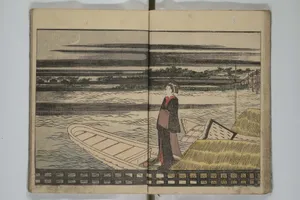
![『俳優三階興』|Amusements of Kabuki Actors of the “Third Floor” [Dressing Room], by Shikitei Sanba 俳優三階興](https://images.artheonmuseum.org/met/as/thumb/amusements-of-kabuki-actors-of-the-third-floor-dressing-room-by-shikitei-sanba-78767.webp)