Ctrl K
1845–1880
Utagawa Yoshitora (歌川 芳虎), also known by his art names Ichimōsai, Mōsai, and Kinchōrō, was a prolific ukiyo-e artist born in Edo (modern Tokyo), where he trained under the renowned Utagawa Kuniyoshi, recognized as his oldest pupil. Little is known of his early life, which remains sparsely documented, but his earliest works include illustrations for the book *Story of Karasu Kanzaemon’s Loyalty* in 1836 and his first print series in the early 1840s. A pivotal moment came in 1849 with the irreverent warrior print *Dōke musha: Miyo no wakamochi*, depicting historical figures like Oda Nobunaga making rice cakes; censors viewed it as mocking authority, leading to Yoshitora being manacled for fifty days and expelled from Kuniyoshi's studio. Undeterred, he continued producing works in the Utagawa school tradition, excelling in dynamic musha-e (warrior prints) such as depictions of battles between Takeda Shingen and Uesugi Kenshin (1847–1853).
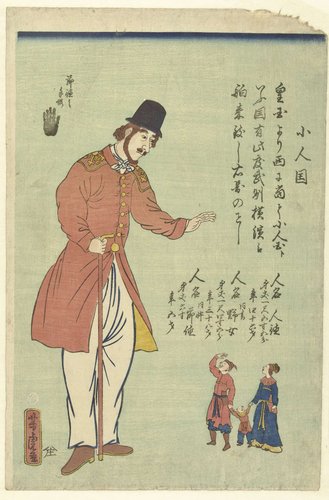
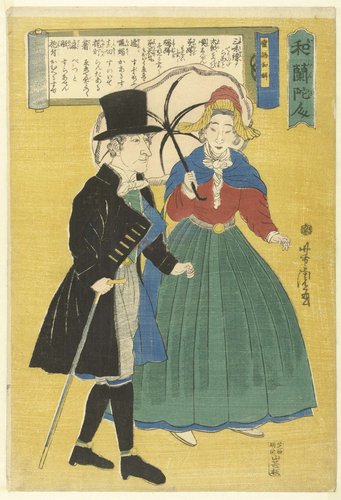
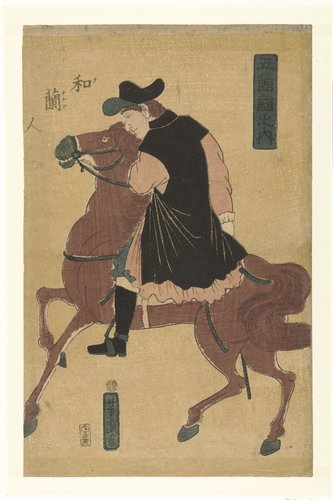
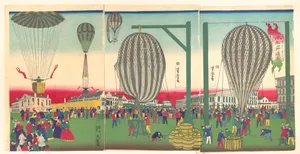
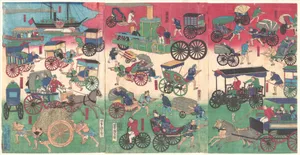
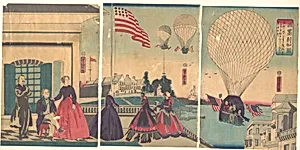
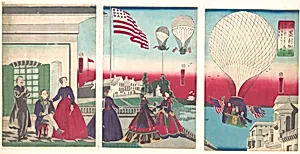
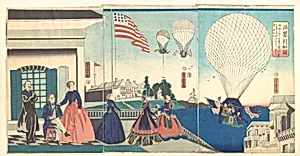
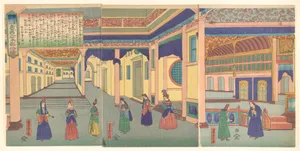
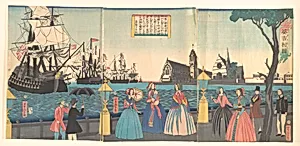
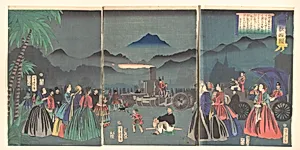
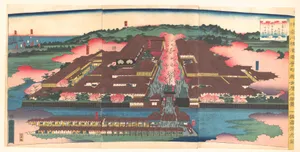
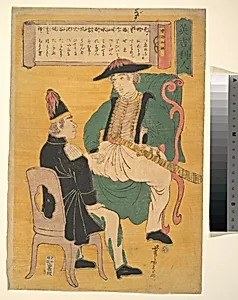
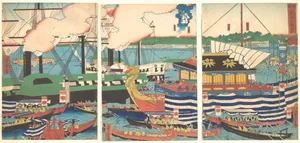
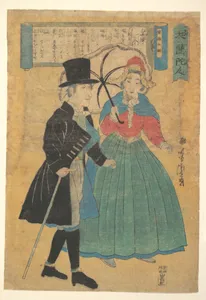
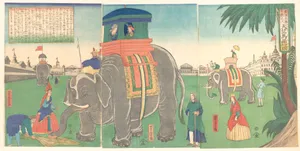
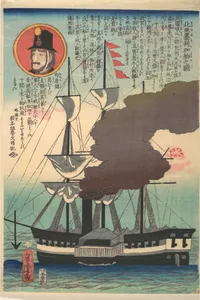
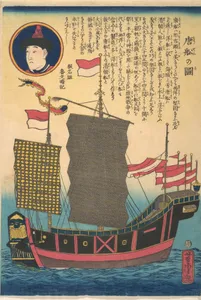
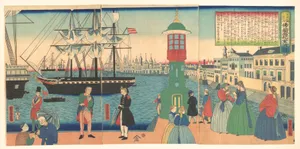
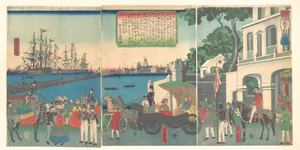
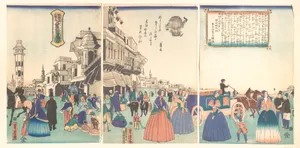
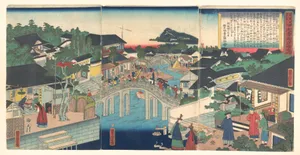
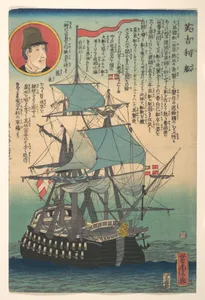
Yoshitora's oeuvre spanned kabuki actor portraits (okubi-e), bijin-ga (beautiful women), historical triptychs, and humorous giga, with over 60 print series to his name. He collaborated with artists like Utagawa Kunisada I on large-head actor portraits and Utagawa Yoshiiku on *Famous Views of Modern Tokyo* (1873). Post-1860s, amid Japan's opening to the West following the 1854 Treaty of Kanagawa, he became a master of Yokohama-e, vividly portraying foreigners, their fashions, pets, and technologies like steam trains and iron ships—over 150 such designs, including *English Couple* (1860), *Paris, France* (1862), and *France* (1865). Series like *Bankoku Meisho Zukushi no Uchi* imagined foreign cities such as London and Washington, often sourced from Western engravings.
Active until around 1880–1882, Yoshitora adapted to the Meiji era (1868 onward) as a newspaper illustrator and journalist, with later works like *Sixty-odd Famous Generals of Japan* reflecting relaxed censorship. His versatile output—over 100 illustrated books and countless prints—captured Edo's fading world and Japan's modernization, bridging ukiyo-e's golden age with modern visual culture. Though exact dates elude us, Yoshitora's bold compositions and prolificacy cement his legacy as a key chronicler of transition.