Ctrl K
1589–1635
**Wilhelm Peter Zimmermann (active 1589–died ca. 1630) was a German painter, draughtsman, etcher, and publisher based in Augsburg.** He produced a range of prints documenting contemporary events, festivals, architecture, and military scenes during the early seventeenth century. His publishing house issued broadsides and illustrated books, and after his death the establishment passed to Jeremias Wolff.
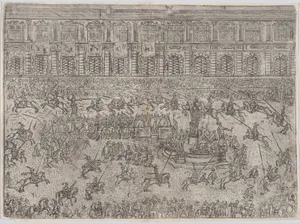
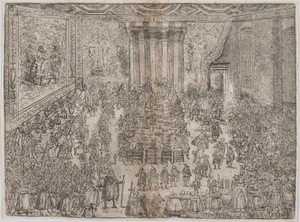
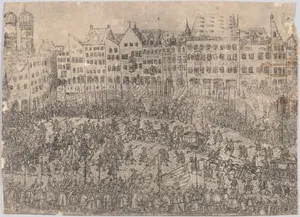
Zimmermann specialized in detailed etchings that captured the pageantry and drama of his era. One of his most notable projects was a series of eleven etchings illustrating the 1613 wedding festivities of Wolfgang Wilhelm, Duke of Pfalz-Neuburg, and Magdalena, Duchess of Bavaria, held in Munich. Published in Augsburg in 1614, the plates depict ceremonial entries into the church, princely banquets, and equestrian tournaments such as the running of the Quintana and the breaking of spears. He also created views of Hungarian cities and fortifications, as well as broadsides recording sieges and urban scenes, including works showing Prague and other locales.
Although details of his training and early life remain undocumented, Zimmermann’s output reflects the vibrant printmaking culture of Augsburg, where he operated as both artist and publisher from at least 1589 onward. His etchings combine precise topographical observation with lively narrative detail, serving as valuable visual records of Habsburg-era celebrations and conflicts.
Zimmermann’s legacy endures through the survival of his prints in major collections, including the British Museum and the Metropolitan Museum of Art. These works continue to illuminate the visual culture and historical events of the early Baroque period in Central Europe. His three known artworks in the present collection exemplify his skill in commemorative printmaking.