Ctrl K
1619–1693
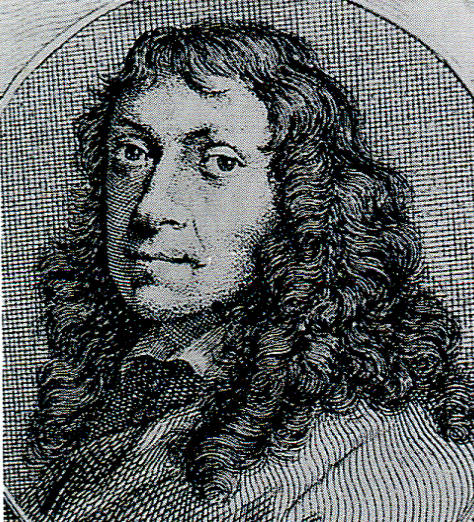
Willem Kalf, baptized on November 3, 1619, in Rotterdam, emerged as one of the Dutch Golden Age's preeminent still-life painters. Born to a prosperous cloth merchant, Jan Jansz. Kalf, and Machtelt Gerrits, he lost his father amid scandal in 1625 and his mother in 1638, prompting his departure from Rotterdam around age 18. He studied under Hendrik Gerritsz. Pot, though early works show stronger affinities with Rotterdam artist Frans Rijckhals. In 1651, Kalf married Cornelia Pluvier, a talented poet, calligrapher, and glass engraver; the couple settled in Amsterdam shortly after, raising four children amid comfortable circumstances.
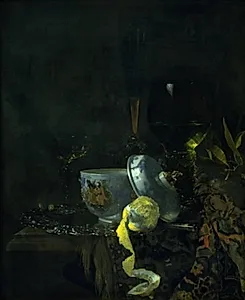
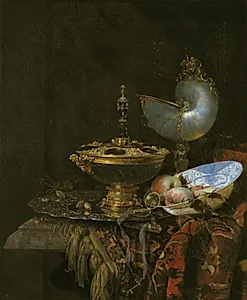
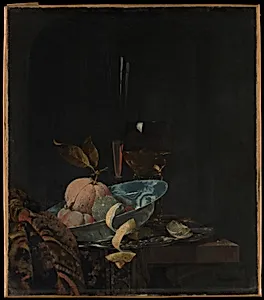
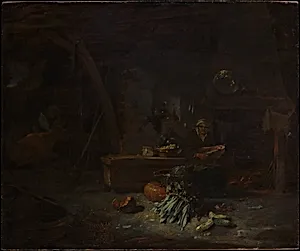
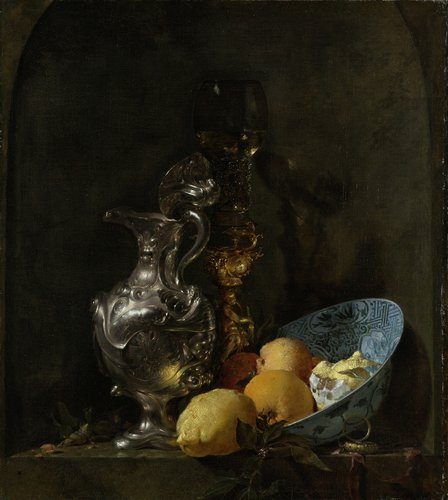
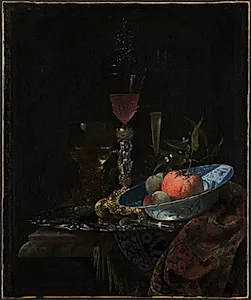
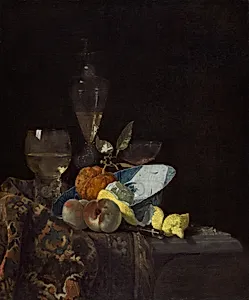
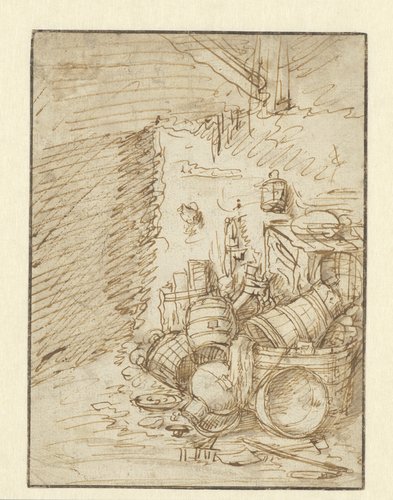
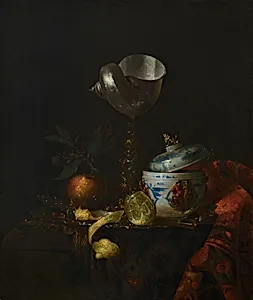
Kalf's career began in Paris around 1641, where he crafted rustic kitchen interiors—crowded with gourds, pots, and vegetables in the Flemish tradition of David Teniers the Younger—before evolving the banketje into opulent pronkstilleven, or "sumptuous still lifes." Returning to the Netherlands in 1646, he joined Amsterdam's Saint Luke's Guild in 1654, refining his signature style: select luxury imports like Venetian goblets, Wanli porcelain bowls spilling half-peeled citrus, nautilus cups, and silver ewers by goldsmiths such as Johannes Lutma, dramatically lit against dark voids with luminous highlights akin to Johannes Vermeer's technique. These compositions celebrated the Dutch Republic's mercantile wealth, prioritizing aesthetic splendor over overt vanitas moralizing.
Iconic works include *Interior of a Rustic Kitchen* (1642–1643, Louvre), capturing his early phase; *Still Life with Nautilus Beaker and Porcelain Lidded Bowl* (1662); *Still Life with Fruit, Glassware, and a Wanli Bowl* (1659, Metropolitan Museum); *Pronk Still Life with Holbein Bowl, Nautilus Cup, Glass Goblet, and Fruit Dish* (1678, National Gallery of Denmark); and his final painting, *Still Life with Holbein Bowl and Silver Ewer* (1680, Schloss Weimar). Ceasing to paint around 1680, Kalf pivoted to art dealing and appraisal, authenticating works by masters like Paulus Bril and Titian.
Kalf's legacy endures in his elevation of still life to virtuoso display, influencing French artists like the Le Nain brothers, Chardin, and Boucher, who collected and reinterpreted his interiors. Followers such as Juriaen van Streeck emulated his precision, while his paintings fetch millions at auction, affirming his status as a pinnacle of 17th-century opulence.