Ctrl K
1807–1879
William Barber, born on May 2, 1807, in London, England, honed his skills as an engraver under the tutelage of his father, John Barber, a fellow practitioner in the craft.) Early in his career, he crafted embossing dies for De La Rue & Co. and worked on silver plate tableware. In September 1852, Barber emigrated to the United States, settling first in Boston, where he spent a decade employed in engraving, including stints with Gorham & Co. on silver items during the Civil War era. His reputation reached James B. Longacre, Chief Engraver of the U.S. Mint in Philadelphia, leading to his appointment as assistant engraver in 1865. Following Longacre's death, Barber ascended to Chief Engraver on January 20, 1869, a position he held until his own passing.
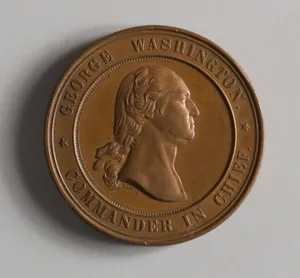
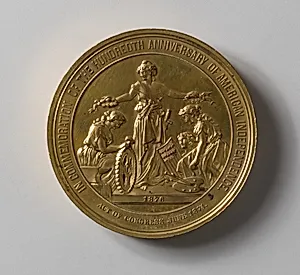
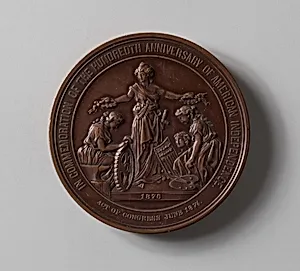
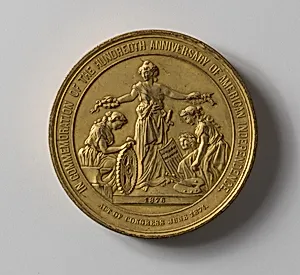
As Chief Engraver, Barber worked in the precise tradition of numismatic diesinking and medallic sculpture, producing hubs for circulating coins and a profusion of patterns and medals. His most notable circulating design was the Trade Dollar of 1873–1885, featuring a seated Liberty obverse inspired by earlier motifs and a reverse Britannia, intended primarily for commerce in the Far East. He also modified the reverse of the Twenty-Cent Piece in 1875 and created innovative patterns, such as the 1872 Amazonian series, 1877 "Sailor Head" twenty-cent pieces, and the 1877 $50 Half Union gold pattern. Barber's medal output exceeded 40 pieces, including the 1869 Pacific Railroad Completion Medal, the 1876 United States Centennial Exposition Medal, the 1878 Valley Forge Centennial Medal, and annual U.S. Mint Assay Medals from 1868 to 1879, alongside Presidential series like the 1879 Grant Inaugural Medal (co-engraved with his son Charles).)
Barber's legacy endures through his voluminous contributions to American numismatics, bridging the post-Civil War era with innovative patterns that influenced later designs, though his circulating coins drew mixed reception. Married to Anna Maria May, he fathered four children, including son Charles E. Barber, whom he hired as assistant in 1869 and who succeeded him as Chief Engraver in 1880, establishing a family dynasty at the Mint. Barber died suddenly on August 31, 1879, in Philadelphia at age 72, after falling ill during a Jersey Shore vacation; his Mint colleagues honored him with a memorial resolution. Buried in Mount Moriah Cemetery alongside his wife and two daughters, Barber's meticulous engravings remain prized in collections worldwide.)