Ctrl K
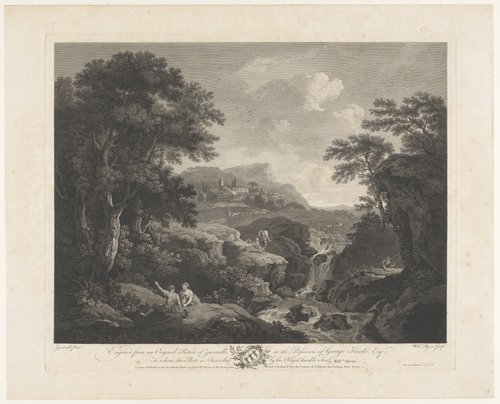
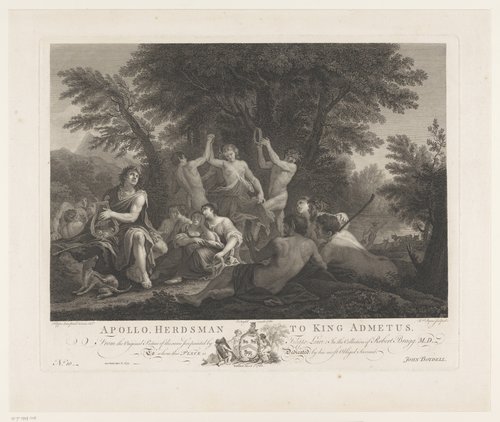
William Byrne (1743–1805) was a distinguished British landscape engraver and print publisher whose refined interpretations of picturesque British scenery helped establish landscape engraving as an independent artistic genre in late eighteenth-century England. Born in London and trained in the French tradition of tonal engraving under masters Aliamet and Jean-Georges Wille, Byrne brought Continental sophistication to the burgeoning English market for topographical and landscape prints. His collaboration with leading landscape painters and topographical draftsmen—most notably Thomas Hearne—resulted in some of the finest landscape engravings of the Georgian era, combining technical precision with atmospheric sensibility. Byrne's career exemplifies the professionalization of British printmaking in the later eighteenth century, when engravers emerged from artisanal anonymity to achieve recognition as creative interpreters rather than mere reproductive technicians. His work on major publications such as 'Britannia Depicta' helped satisfy the growing middle-class appetite for images celebrating British landscapes, antiquities, and picturesque scenery. Beyond his individual achievements, Byrne established a remarkable artistic dynasty: all five of his children became professional artists and engravers, carrying his technical traditions and professional standards into the nineteenth century.
William Byrne was born in London in 1743 into a family with artistic connections. His uncle, though 'little known' according to contemporary accounts, provided Byrne's initial artistic instruction, introducing him to the fundamentals of drawing and perhaps elementary engraving techniques.
Recognizing the superiority of Continental training in engraving—particularly the French tradition of tonal line work and sophisticated landscape interpretation—Byrne traveled to Paris to complete his professional education. There he became a pupil of Jacques Aliamet (1726–1788), a skilled French engraver known for his topographical and landscape prints. More significantly, he studied under Jean-Georges Wille (1715–1808), the preeminent engraver in Paris and among the most respected printmakers in Europe.
Wille's workshop was renowned for its exacting standards and systematic approach to tonal engraving. Under Wille's tutelage, Byrne mastered the sophisticated techniques of line modulation, atmospheric gradation, and the translation of painterly effects into the linear language of engraving. The French tradition emphasized the engraver as interpretive artist rather than mechanical copyist—a philosophy Byrne would carry throughout his career.
At age twenty-two (1765), Byrne demonstrated his emerging mastery by winning a premium of 25 guineas from the Society of Arts, one of Britain's principal institutions for promoting artistic and industrial excellence. This recognition marked his transition from student to professional practitioner and facilitated his establishment in the competitive London print market.
Returning to London with Continental training and emerging reputation, Byrne established himself as a landscape engraver and print publisher. The timing was propitious: the later eighteenth century saw exploding British demand for landscape prints, driven by antiquarian interests, tourism, aesthetic appreciation of the picturesque, and growing national pride in British scenery and architectural heritage.
Byrne worked extensively with Thomas Hearne (1744–1817), one of the finest topographical watercolorists of the era. Their collaboration produced numerous prints interpreting Hearne's delicate, atmospheric landscape drawings. Byrne's engravings successfully translated Hearne's subtle washes and tonal gradations into the linear medium of engraving, preserving the original drawings' sense of light, space, and atmospheric depth.
Among Byrne's most significant projects was 'Britannia Depicta,' an ambitious publication presenting views of picturesque sites throughout Great Britain. Such topographical series served multiple cultural functions: they satisfied armchair travelers' curiosity about distant regions, provided visual records of architectural monuments and landscapes threatened by change, and contributed to emerging concepts of British national identity grounded in landscape appreciation.
As a print publisher, Byrne occupied the dual role of artistic interpreter and commercial entrepreneur. He selected subjects, commissioned or acquired drawings, executed or supervised engravings, financed production, managed distribution, and maintained relationships with print sellers and collectors. This integrated practice allowed greater artistic control but required significant capital investment and business acumen.
Byrne created both etchings and engravings, often combining the techniques within single plates. Etching allowed more spontaneous, sketch-like effects, while engraving provided precise control over tonal gradations. His landscapes demonstrate sophisticated understanding of atmospheric perspective, skillful rendering of foliage and architectural detail, and sensitive interpretation of his source materials' aesthetic qualities.
Beyond landscape, Byrne's oeuvre included topographical views, antiquarian subjects, and architectural prints. His work exemplifies the British engraving tradition's emphasis on precise observation, clear composition, and dignified presentation rather than dramatic effect or virtuosic display.
William Byrne died in London in 1805 at the age of sixty-two. His legacy extended through his children, all five of whom entered artistic professions: Anne Frances (1775–1837), Mary (1776–1845), Letitia (1779–1849) who became a painter and etcher, Elizabeth (fl. 1808–49) who worked as a landscape painter and engraver, and John (1786–1847) who achieved distinction as both engraver and landscape painter. This remarkable artistic dynasty ensured the transmission of Byrne's technical standards and professional practices well into the nineteenth century.
Artheon Research Team
Last updated: 2025-11-09
Biography length: ~472 words
Wikidata (CC0)
All 3 artworks loaded