
Ctrl K
1806–1834
William Frome Smallwood (1806–1834) was a British artist active in the early 19th century, whose brief career centered on meticulous architectural drawings. Born and died in London, Smallwood produced works that capture intricate Gothic details and continental landmarks, reflecting a keen eye for historical architecture during the Romantic era's fascination with the medieval past. His life, spanning just 28 years, remains sparsely documented, with little known about his early training or formal education in art schools. No records identify specific teachers or mentors, suggesting he may have been self-taught or apprenticed informally amid London's burgeoning artistic scene.
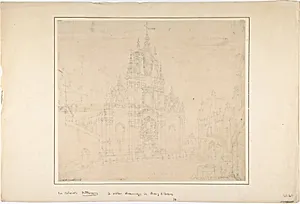
Smallwood's extant oeuvre consists primarily of pencil drawings preserved in major collections, showcasing his precision in rendering stonework and structural elements. Notable examples in the Victoria and Albert Museum include three studies of Gothic architectural details from unidentified buildings, likely executed in the early 1820s, and a detailed view of the corner of the Church of St. Maclou in Rouen, France. These works demonstrate his affinity for ornate tracery, flying buttresses, and sculptural flourishes, hallmarks of French Flamboyant Gothic architecture. His travels to Normandy, evidenced by the Rouen drawing, align with the period's Grand Tour traditions among British artists, though he produced no known oil paintings or larger commissions. Auction records indicate occasional sales of his pieces, hinting at a modest contemporary recognition.
Though overshadowed by contemporaries like J.M.W. Turner or John Constable, Smallwood's drawings contribute to the documentation of Gothic Revival interests that influenced later Victorian architects and artists. Held in institutions such as the V&A and featured on Art UK, his precise studies serve today as valuable topographical records, preserving vanishing architectural nuances for scholars and restorers. Smallwood's early death curtailed a potentially richer legacy, but his surviving sketches endure as testaments to an unassuming talent attuned to the poetry of stone. (312 words)