Ctrl K
William I. Marshall, born William Isaac Marshall on June 25, 1840, in Fitchburg, Massachusetts, pursued a multifaceted career as a miner, publisher, educator, lecturer, and historian rather than receiving formal artistic training. In 1866 he arrived in Montana Territory, residing in Virginia City until 1875 and working mining claims, where he encountered the Hayden survey party in 1871. During this period he purchased a large collection of 122 stereo-views of Yellowstone and Montana landscapes originally taken by photographer Joshua Crissman, which he then published and marketed under his own copyright beginning in the 1870s. He visited Yellowstone National Park with his family in 1873 and 1875, claiming to have been among the first to take children through the newly established park.
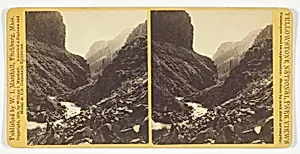
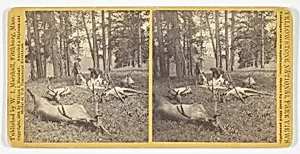
Marshall’s published stereo-views and photographs focused on the dramatic natural features of Yellowstone, capturing geysers, hot springs, waterfalls, geological formations, and wilderness landscapes in a documentary yet visually compelling style typical of 19th-century stereography. These works, issued around 1876 as the series *Yellowstone National Park Views*, brought remote Western scenery to audiences in the East through affordable stereo cards sold at lectures and by mail. Specific images include *Old Faithful from E. Near View* (1876), *The Pinnacles* (1876), *The Tower, Tower Creek* (1876), *The Crater of the Mud Volcano* (1876), and *Leaf Form in Limestone* (1876). He advertised the views to teachers and clergymen, noting they had received awards at the 1876 Centennial Exposition, and sold them for three dollars per dozen.
After returning to Fitchburg, Massachusetts, in 1875, Marshall later moved to Chicago in 1887, where he served as principal of the Gladstone School. He remained deeply engaged with Yellowstone, proposing commercial tours in 1879, making additional visits in 1881 and 1882, and delivering more than two hundred lectures on the park, Yosemite, and mining. He also wrote extensively as a historian, particularly challenging the “Whitman Myth” regarding the acquisition of Oregon in books such as *The Acquisition of Oregon* (1905). Marshall died on October 30, 1906, in Chicago. His stereo-views survive in collections including the George Eastman Museum and Brigham Young University, preserving early visual records of Yellowstone that helped popularize the national park in its formative years.