Ctrl K
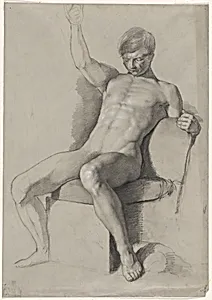
1703–1763
William Linnell (1826–1906) was a British painter and draftsman born in London. He was the third son of the acclaimed landscape painter John Linnell (1792–1882), a close associate of William Blake whose influence shaped the family’s artistic milieu. William studied at the Royal Academy Schools, where he honed his skills in drawing and painting amid the traditions of British academic art.
Linnell specialized in English and Welsh landscapes and rustic pastoral scenes, capturing the natural beauty of rural Britain with a focus on light, atmosphere, and detailed observation of terrain and foliage. His works often reflect the Romantic emphasis on nature inherited from his father’s generation, though he developed his own sensitive approach to topography and everyday rural subjects. He exhibited regularly at the Royal Academy from 1851 to 1891, establishing a steady presence in the Victorian art world.
Among his notable works is the 1840 drawing of *Smugglerius*, an écorché figure posed after the ancient Roman *Dying Gaul*, which remains one of his most recognized contributions to anatomical and classical studies. Other significant pieces include landscape views such as *On the Road from Betws-y-coed to Dolwyddelan*, *Near Red Hill*, and *North Welsh Landscape*, alongside studies of rocks, trees, and wooded valleys now held in public collections.
Linnell’s legacy endures through his presence in major institutions, including the Tate in London, the Fitzwilliam Museum at Cambridge University, and the National Gallery of Art in Washington, D.C. His drawings and paintings continue to appear at auction, valued for their quiet precision and contribution to 19th-century British landscape traditions.
All 2 artworks loaded