Ctrl K
**Thomas Colley (also known as Thomas Graham Colley, c. 1758–c. 1833) was a British printmaker, etcher, and publisher specializing in satirical and political prints during the late eighteenth century.**
Active primarily in London from the late 1770s to the early 1780s (the period noted in many collections as 1778–1783), Colley produced a prolific body of work that captured the turbulent politics of the American Revolutionary era and related European conflicts. He later relocated to the Portsmouth and Plymouth areas, where he continued engraving and his sons carried on the family trade.
Colley trained as an apprentice to the prominent caricaturist and publisher Matthias Darly beginning in 1772. In 1778 he married Darly’s daughter, Mattina Darly, forging a close professional and personal tie to one of London’s leading printmaking families. He operated from several addresses in the Strand and nearby districts, often publishing his own plates or collaborating with figures such as William Richardson.
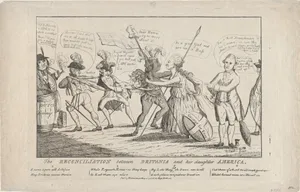
His style belongs firmly to the British tradition of satirical etching and caricature, characterized by sharp wit, exaggerated figures, and pointed commentary on current events. Notable works include the 1782 etching *The Reconciliation Between Britannia and Her Daughter America* (published by William Richardson) and prints such as *The State Nurses* (1781) and *The Relief of Gibraltar* (1783). These pieces exemplify his skill in distilling complex political narratives into accessible, humorous images.
Colley’s legacy lies in his contribution to the vibrant culture of Georgian political satire. His prints, held in major institutions including the British Museum and the Metropolitan Museum of Art, remain valuable historical documents. Two of his sons, John Long Colley and Thomas Graham Colley, became engravers and copperplate printers, extending the family’s artistic lineage into the nineteenth century.
Though his later life in the provinces is less documented than his London years, Colley’s output helped shape the visual language of public discourse during a pivotal moment in British and American history.
All 2 artworks loaded