Ctrl K
1735–1783
**Caspar Wolf** (1735–1783) was a Swiss painter renowned for his dramatic and pioneering depictions of the Alps, capturing glaciers, caves, waterfalls, and gorges with a sense of sublime grandeur. Born on 3 May 1735 in Muri, Aargau, he was the son of a furniture maker who had been banned from his city. His early training took place in Konstanz, followed by work as a decoration painter in Augsburg, Munich, and Passau between 1753 and 1759.
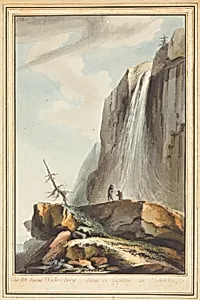
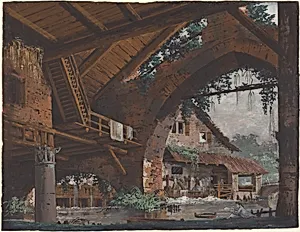
After struggling to sell his work and returning home disappointed, Wolf painted hand-decorated wallpaper for Horben Castle. He later lived in Basel in 1768 and spent 1769–1771 in Paris, where he worked with the landscape artist Philip James de Loutherbourg. In 1774 he settled in Bern and formed a productive partnership with publisher Abraham Wagner, who commissioned around 200 paintings of Alpine subjects. Wolf traveled extensively through the Berner Oberland and Valais, often accompanied by Wagner or the minister Jakob Samuel Wyttenbach, producing his most characteristic works from the mid-1770s onward.
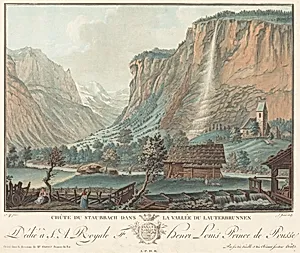
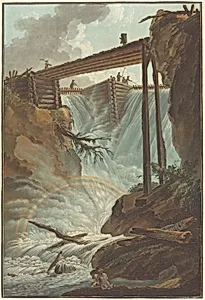
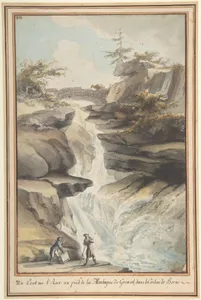
Wolf’s artistic style aligned with the Sturm und Drang movement and drew strong inspiration from Albrecht von Haller’s poems celebrating the Alps. His paintings emphasize the raw power and vast scale of mountain landscapes, moving beyond conventional topographical views to evoke emotional intensity. Notable examples include *Lower Grindelwald Glacier* (1774–1777) and various scenes of the Berner Oberland. He also produced prints and aquatints, though a planned publication in 1779 met with limited success during his lifetime.
Wolf spent his final years working in several German cities before dying in poor circumstances in a Heidelberg hospital on 6 October 1783. His son, Theodor Wolf (1770–1818), became a still-life painter. Although many of Wolf’s original paintings remained relatively obscure for decades, his Alpine series gained lasting recognition; aquatints from the project were later published in Amsterdam in 1785, and significant holdings are preserved today in institutions such as the Kunsthaus in Aarau. His work helped establish the dramatic mountain landscape as a central theme in European Romantic art.