Ctrl K
Wolfgang Tillmans, born on 16 August 1968 in Remscheid, West Germany, developed an early fascination with photography through visits to museums in Düsseldorf and Cologne, where he encountered the photo-based works of Gerhard Richter, Sigmar Polke, Robert Rauschenberg, and Andy Warhol. A 1983 exchange student trip to England introduced him to British youth culture, inspiring his later focus on club scenes and fashion. After high school friendships with designers Alexandra Bircken and Lutz Huelle, he held his first solo exhibitions in Hamburg in 1988. Tillmans studied at Bournemouth and Poole College of Art and Design from 1990 to 1992, then relocated to London, immersing himself in the city's vibrant gay and rave scenes.
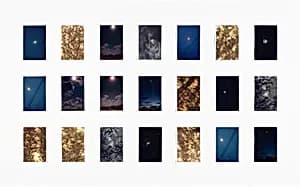
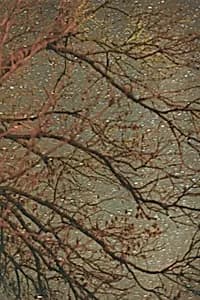
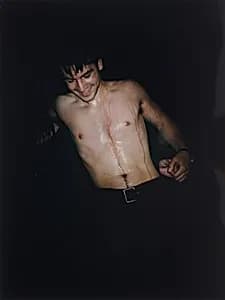
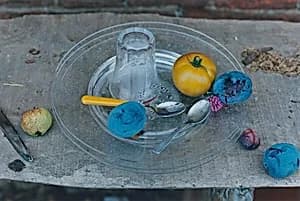
Tillmans redefined fine-art photography through diverse, observational images that blend portraiture, abstraction, and installation. Rejecting hierarchy, he pins unframed prints, inkjets, and ephemera directly to walls in site-specific arrangements, mixing scales and genres to probe perception and the medium's limits. Early staged portraits like *Lutz & Alex sitting in the trees* (1992) captured androgynous youth, while grids such as *Concorde Grid* (1997), *Total Solar Eclipse Grid* (1998), and *Snow/Ice Grid* (1999) explored repetition and ephemerality. From 1998, cameraless abstracts like *Freischwimmer 26* (2003) and *Paper drop (window)* (2006) experimented with light, paper, and chemistry, alongside videos and *Truth Study Center* (2005–), a glass-topped archive critiquing ideology and "fake news."
His career peaked with the Turner Prize in 2000—the first for a photographer and non-British artist—followed by teaching roles as guest professor at the University of Fine Arts Hamburg (1998–1999) and professor at Städelschule Frankfurt (2003–2006). Major retrospectives include Tate Modern (2017), MoMA's *To look without fear* (2022–2023), and Centre Pompidou (2025). Tillmans has released music EPs, run non-profit spaces like Between Bridges, and engaged in activism, producing Remain campaign posters (2016) and anti-AfD graphics (2017).
Tillmans' legacy endures in his expansion of photography's poetic and political scope, influencing generations through immersive installations that affirm everyday beauty amid fragility. Honored with the Hasselblad Award (2015) and named to TIME's 100 Most Influential (2023), he continues bridging image, sound, and social observation from studios in Berlin and London.