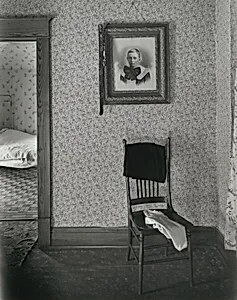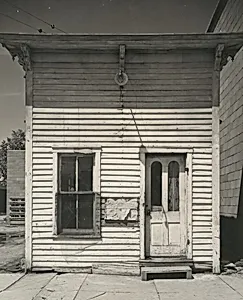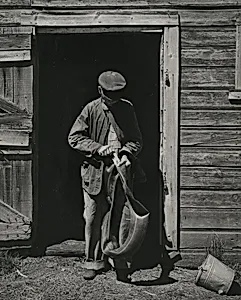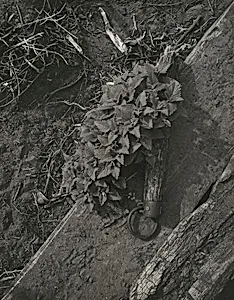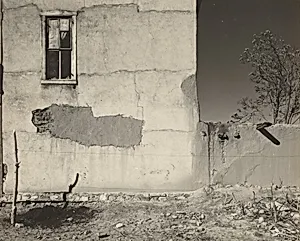
Wright Morris (1910–1998) was a pioneering American photographer whose spare, evocative images captured the textures of rural life on the Great Plains, often paired innovatively with his own prose. Born in Central City, Nebraska, on January 6, 1910, Morris lost his mother, Grace Osborn Morris, just days after his birth; his father, a Union Pacific Railroad worker, remarried Gertrude, and the family spent time in Omaha before young Wright enjoyed summers on his uncle Harry and aunt Clara's farm near Norfolk, Nebraska. These formative Nebraska landscapes profoundly shaped his vision. He attended Pacific Union College and graduated from Pomona College with a BA in 1933, then traveled Europe from 1933 to 1934, purchasing his first camera in Vienna and honing his skills independently.
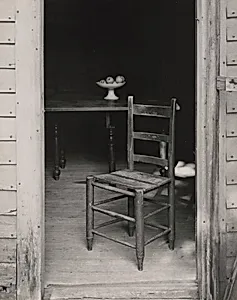
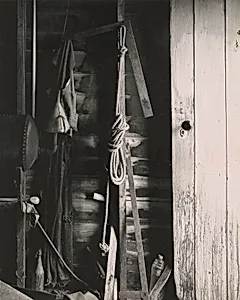
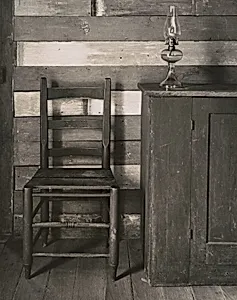
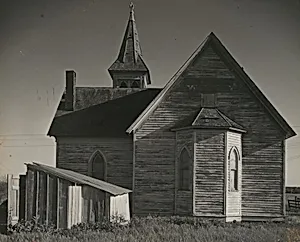
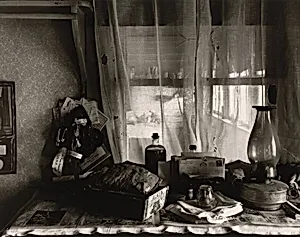
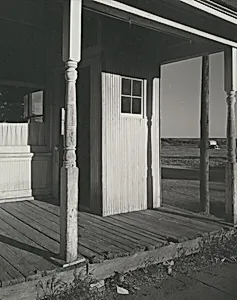
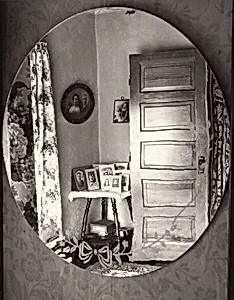
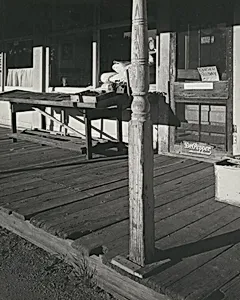
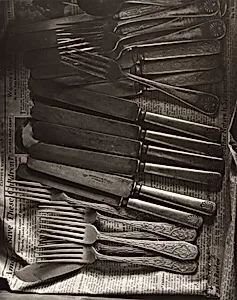
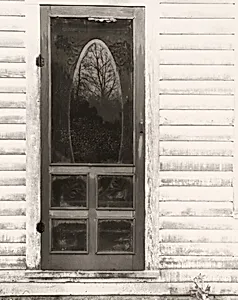
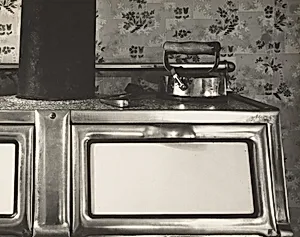
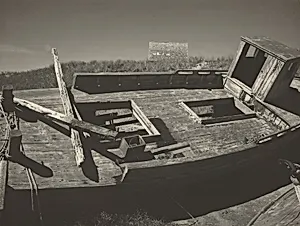
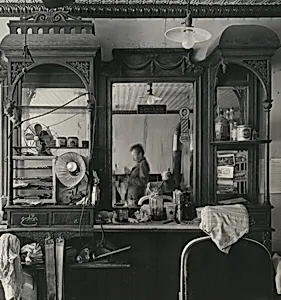
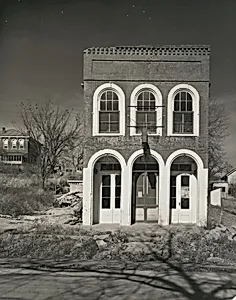
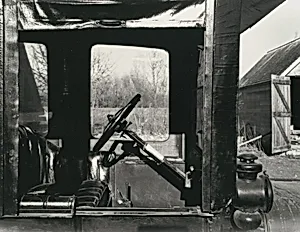
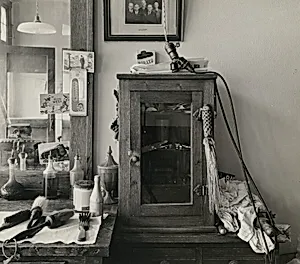
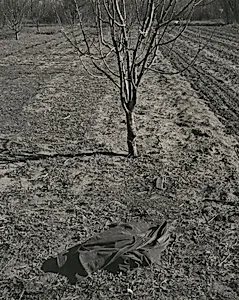
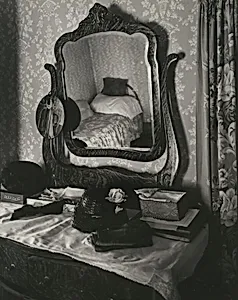
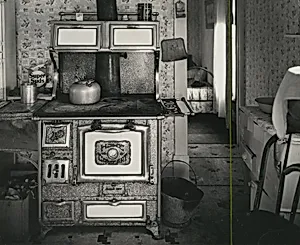
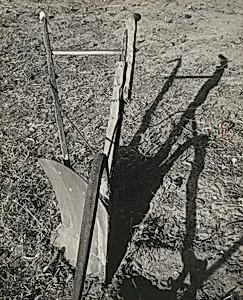
Returning to the U.S., Morris acquired a Rolleiflex in 1935 and developed a signature style blending documentary precision with poetic fiction—images devoid of human figures, focusing on everyday objects, weathered architecture, and atmospheric details of homesteads, barns, and vast prairies. His work evokes absence and memory, referencing the Great Plains tradition while pushing toward narrative experimentation. Major photo-text books like *The Inhabitants* (1946), documenting domestic scenes across the South, Midwest, and Southwest; *The Home Place* (1948), a visual novel with accompanying prose; and *God’s Country and My People* (1968), his most acclaimed, fused photography and writing in a groundbreaking format. Iconic prints include *Garden City, Kansas* (1939), *Cape Cod, Massachusetts* (1938), *Home Place* (1947), and *Railroad Station Office, Nebraska* (1947), part of the National Gallery of Art's collection of 195 works.
Morris first exhibited his photo-texts in 1940 at the New School for Social Research in New York, with the Museum of Modern Art acquiring prints that year and later championing his oeuvre through curator John Szarkowski. His archive resides at the Center for Creative Photography at the University of Arizona, cementing his legacy as a forerunner of multimedia art who predated digital fusion of image and text. Though equally renowned as a novelist—winning two National Book Awards—Morris's photographs endure as poignant testaments to vanishing American heartland vernacular, influencing generations to see poetry in the ordinary.