Ctrl K
William S. Kimball & Co. was a tobacco manufacturer based in Rochester, New York, whose influence extended well beyond the cigarette trade into the realm of popular visual culture. Founded in 1846 by William S. Kimball and James C. Hart, the company grew into one of the largest tobacco concerns in the United States, erecting a landmark factory along the Erie Canal on Court Street in 1880. The building was crowned by a 21-foot bronze figure of Mercury — the god of commerce — cast from riveted plates and commissioned from architect J. Guernsey Mitchell in 1881, making it one of Rochester's most recognizable industrial monuments.
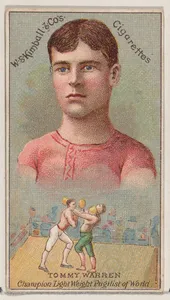
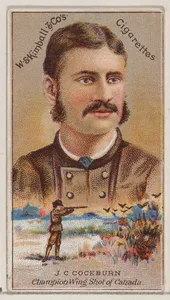
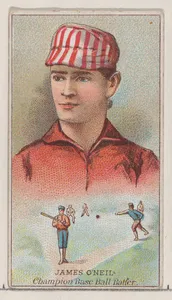
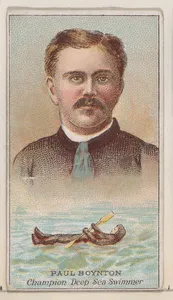
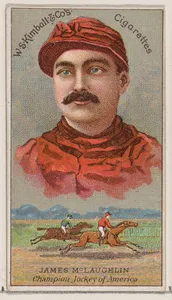
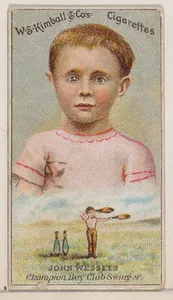
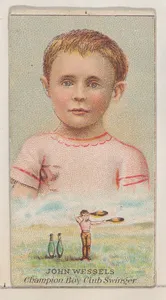
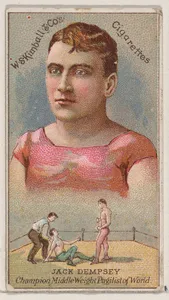
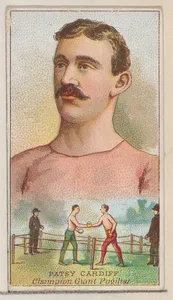
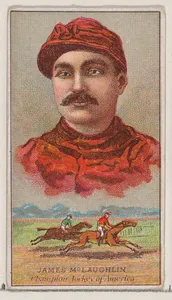
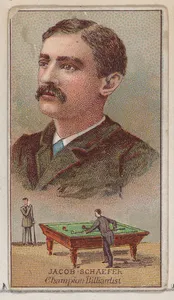
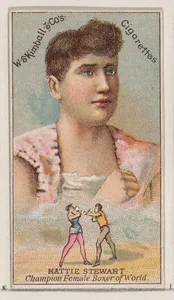
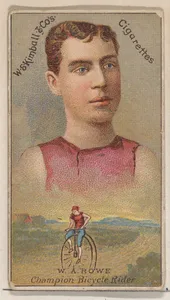
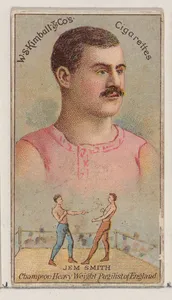
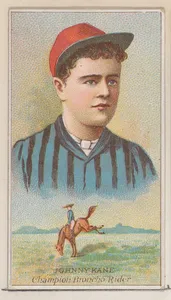
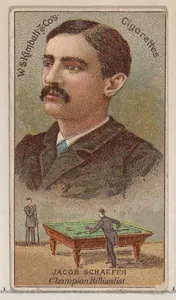
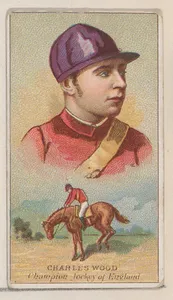
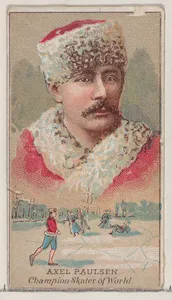
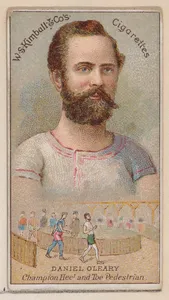
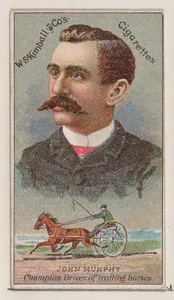
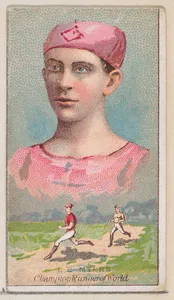
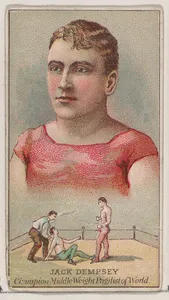
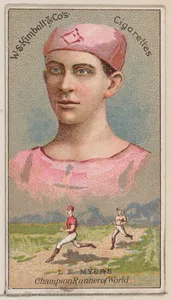
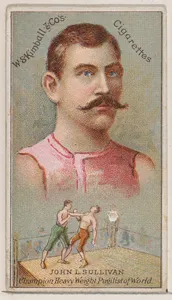
Kimball's place in the history of American graphic art rests largely on its cigarette card programs of the 1880s. Joining rivals such as Allen & Ginter and Goodwin & Company in the competitive trade card market, the firm inserted collectible illustrated cards into its cigarette packages to encourage brand loyalty and repeat purchases. Among its documented series was "Champions of Games and Sports" (N184), issued in 1887, which depicted athletes across a range of sports. The company also issued cards in series featuring actresses, "Fancy Bathers," and other popular subjects of the era, producing imagery that reflected the tastes and curiosities of Victorian American consumers.
The cards were printed in vivid chromolithographic color and served as some of the earliest widely distributed collectible card sets in the country, laying the conceptual groundwork for the trading card industry. Artists and engravers employed by the lithographic printers gave the cards a polished, painterly quality that distinguished the better series as genuine works of commercial art. Collections of Kimball trade cards and advertising ephemera from the 1878–1885 period were recovered from a time capsule in the factory's cornerstone when the building was demolished in 1951, and are now preserved at the Rochester Public Library Archives.
In 1890, Kimball sold the company to the newly formed American Tobacco Company — a consolidation of the five largest tobacco firms in the United States, including Duke, Allen & Ginter, Goodwin, Kimball, and Kinney. The American Tobacco Company soon shut down the Rochester plant and relocated operations southward. Though the factory is gone, Kimball's cigarette cards remain prized by collectors and historians as artifacts of both Gilded Age commercial culture and the early history of American graphic printing.