Ctrl K
1899–1980
Wynna Wright (1899–1980) was an American artist whose precise watercolor renderings captured the charm of everyday American objects. Born in the United States, she demonstrated an early interest in drawing, as evidenced by a sketchbook of original drawings she created between 1908 and 1909. Little else is documented about her formal training or mentors, though her meticulous technique suggests a foundation in careful observation and draftsmanship.
Wright’s artistic output centered on still-life subjects drawn from vernacular American design. In the late 1930s she contributed to the Index of American Design, a Works Progress Administration project that documented historic decorative arts through detailed illustrations. Her works in this series, executed primarily in watercolor with graphite or pen and ink, emphasize clarity, texture, and a touch of whimsy in their depiction of ordinary items.
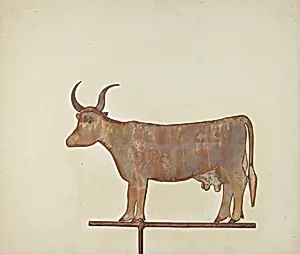
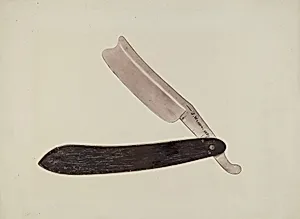
Two notable examples from this period are *Cow Weather Vane* (c. 1938), a watercolor, graphite, and gouache rendering of a folk-art weather vane measuring roughly 22 inches long, and *Barber’s Sign* (c. 1938), a watercolor and pen-and-ink study of a straight razor with a dark wooden handle. Both pieces are now in the collection of the National Gallery of Art.
Wright’s legacy rests on these contributions to the Index of American Design, which preserved visual records of American material culture during the Great Depression. Her two known works in the Artheon Virtual Museum collection continue to highlight her skill in transforming utilitarian objects into engaging studies of form and history.
All 2 artworks loaded