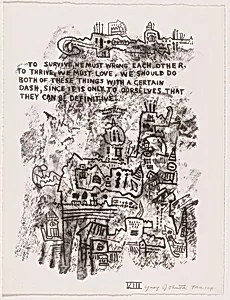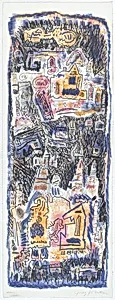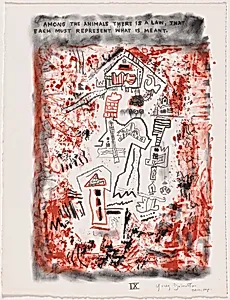
Ynez Johnston (1920–2019) was an American artist celebrated for her richly textured printmaking and painting that drew on a wide range of cultural sources — from pre-Columbian art and Asian calligraphy to the landscapes of Mexico and California. Born in Berkeley, California, she studied at the University of California, Berkeley, where she later taught, and went on to build a career that spanned more than seven decades of sustained creative production.
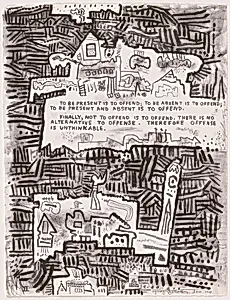
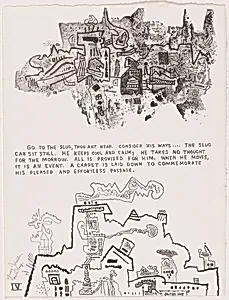
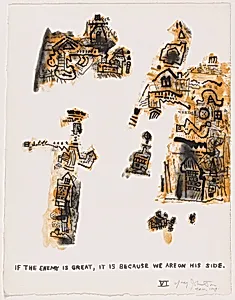
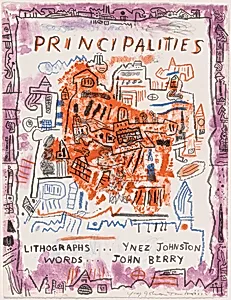
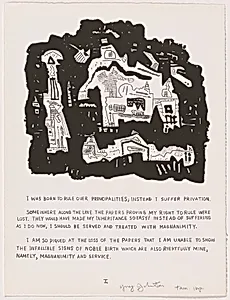
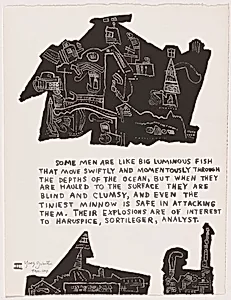
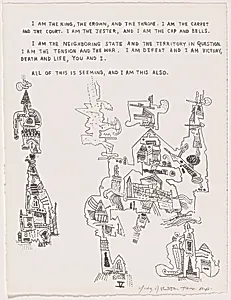
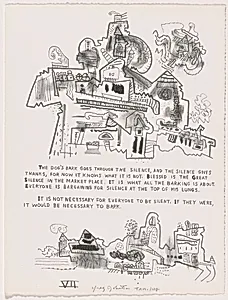
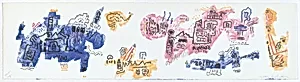
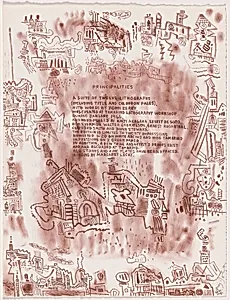
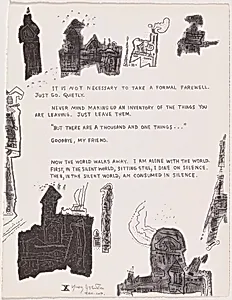
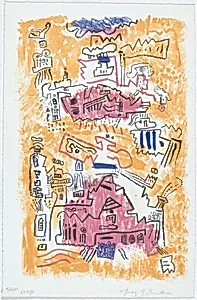
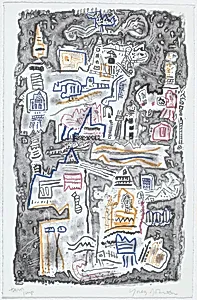
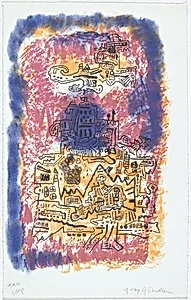
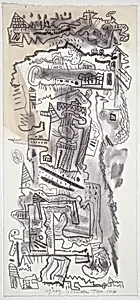
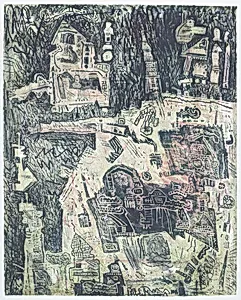
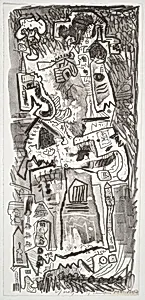
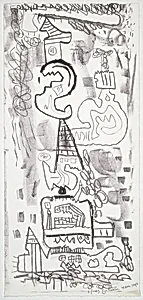
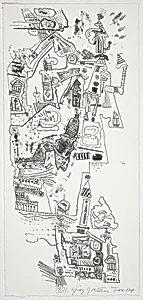
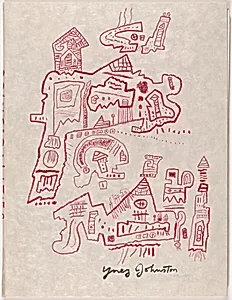
Johnston's work is characterized by an intricate, labyrinthine quality: her compositions weave together fine linear elements, hieroglyphic-like signs, and dense atmospheric fields of color in ways that feel simultaneously ancient and entirely personal. She worked extensively in intaglio printmaking, mastering techniques including etching, aquatint, and engraving, but also produced paintings and drawings that share the same mysterious, layered sensibility. Her imagery evokes primordial landscapes, mythological narratives, and a sense of encoded meaning that invites sustained contemplation.
Exhibiting widely from the 1940s onward, Johnston received recognition from major American institutions and was represented in significant collections and exhibitions of American printmaking. Her long residence in Los Angeles connected her to the vibrant California art scene, though her work always maintained an independent vision that resisted easy alignment with prevailing movements.
Johnston's longevity — she continued working into her nineties — allowed her to accumulate a body of work of remarkable depth and consistency. Her contribution to American printmaking is significant, representing a poetic, symbol-laden counterpoint to the more gestural and pop-inflected tendencies of her era. She is recognized as a pioneering figure in the history of California art and American printmaking.