Ctrl K
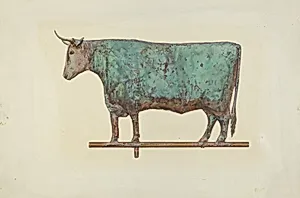
1896–1977
Zabelle Missirian (March 2, 1896–January 1977) was an Armenian-American artist born in Aleppo in the Ottoman Empire. She immigrated to the United States and made her home in Boston, Massachusetts, where she pursued formal training at the Massachusetts Normal Art School. There she studied commercial design in the early 1920s, developing the precise draftsmanship that would define her later work.
In the late 1930s and early 1940s Missirian joined the Index of American Design, a Federal Art Project of the Works Progress Administration. This New Deal initiative commissioned artists to produce meticulous watercolor renderings that documented American folk art, decorative objects, and crafts from the colonial era through the nineteenth century. Working in watercolor, graphite, and gouache, she specialized in capturing the textures of metal, wood, and plaster with documentary accuracy.
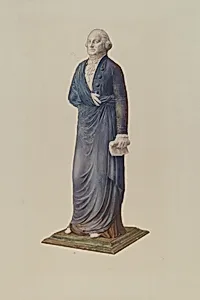
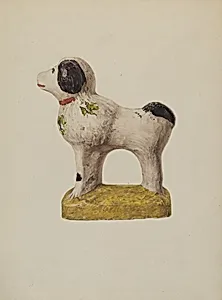
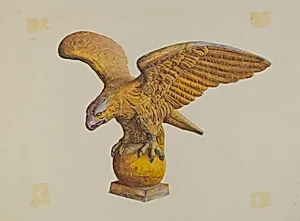
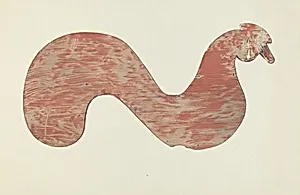
Her five known works in public collections all belong to this project and are held by the National Gallery of Art: Wooden Weather Vane (probably 1939), Metal Eagle (c. 1940), Chalkware Dog (c. 1940), Garden Figure – George Washington (c. 1940), and Steer Weather Vane (c. 1941). These plates record vernacular sculptures and weathervanes with an almost photographic fidelity, revealing both the original objects’ craftsmanship and Missirian’s own technical skill.
Though little of her independent studio production survives, Missirian’s Index plates remain an enduring contribution to the visual archive of American material culture. They illustrate how immigrant artists participated in the WPA’s effort to inventory the nation’s artistic heritage, preserving for later generations the forms and surfaces of everyday folk objects that might otherwise have been lost.