Ctrl K
1727–1814
Occupations
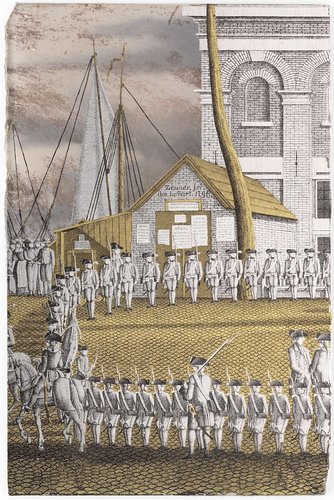
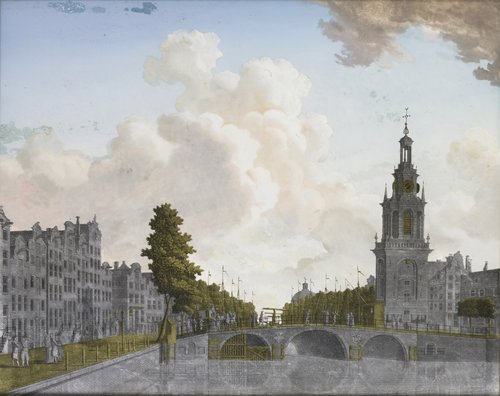
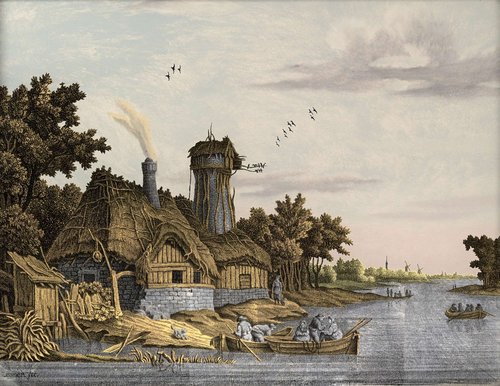
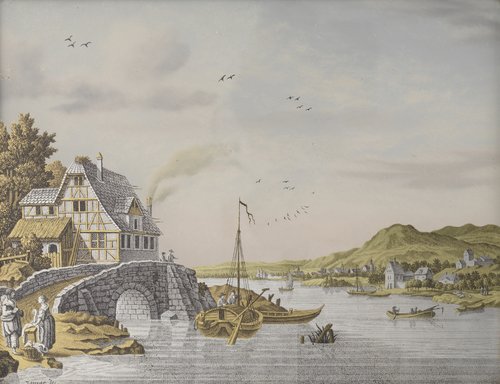
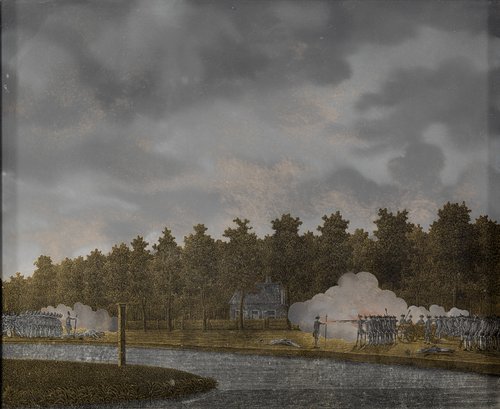
Jonas Zeuner (1727–1814) was a German-Dutch artist and engraver who perfected the distinctive technique of verre églomisé—the art of engraving designs in gold and silver leaf on the reverse side of glass. Born in Kassel, Germany, Zeuner moved to Amsterdam in 1750 at age twenty-three, where he spent the remainder of his sixty-four-year career mastering and refining this specialized decorative art form. His work combined the technical precision of engraving with the luminous beauty of precious metals seen through glass, creating images of exceptional delicacy and brilliance. Zeuner's oeuvre consists mainly of Dutch urban views, particularly scenes of Amsterdam, Haarlem, Utrecht, and Groningen, along with canal and harbor scenes and depictions of country houses along the Vecht and Amstel rivers near Amsterdam. His first recorded work dates from after 1770, after which he produced approximately 170 paintings during his lifetime. Zeuner's technique involved combining oil paint with engraved gold and silver leaf on glass, creating layered compositions of remarkable refinement. His works are preserved in major museum collections including the Rijksmuseum, the Corning Museum of Glass, and the Victoria & Albert Museum, testament to his significance in the history of decorative glass arts.
Jonas Zeuner was born in Kassel, Germany, in 1727, during a period when German artistic centers maintained strong connections to broader European decorative arts traditions. Though details of his early training remain sparse, his later mastery of engraving and decorative techniques suggests thorough apprenticeship in the German craft tradition.
In 1750, at age twenty-three, Zeuner relocated to Amsterdam, one of Europe's wealthiest and most culturally sophisticated cities. The Dutch Republic's prosperity created strong demand for luxury decorative objects, while Amsterdam's international character provided opportunities for artists and craftsmen from across Europe.
Zeuner spent his initial decades in Amsterdam developing his distinctive technique and establishing himself within the city's artistic community. His first recorded work dates from after 1770, suggesting a long period of technical refinement before he began producing his characteristic verre églomisé paintings.
From 1770 onward, Zeuner produced a substantial body of verre églomisé works, creating approximately 170 paintings during his career. His subjects focused primarily on Dutch urban topography, with particular emphasis on Amsterdam's canals, bridges, and architecture, along with views of other Dutch cities including Haarlem, Utrecht, and Groningen.
Beyond urban views, Zeuner specialized in canal and harbor scenes capturing the Netherlands' distinctive waterborne character, as well as country houses and estates along the Vecht and Amstel rivers near Amsterdam. These subjects appealed to wealthy Dutch merchants and patricians who commissioned decorative works celebrating their properties and their nation's urban achievements.
Zeuner's technique involved a complex process of engraving designs into gold and silver leaf applied to the reverse side of glass, then adding oil paint details. When viewed from the front, the precious metals gleamed through the glass while the painted elements provided color and context, creating images of exceptional luminosity and refinement.
Zeuner continued working until his death in 1814 in Amsterdam, having spent sixty-four years in the city. His long career and substantial output established him as one of the principal practitioners of verre églomisé in the Netherlands, preserving the technique at a time when changing fashions threatened its continuation.
Artheon Research Team
Last updated: 2025-11-09
Biography length: ~468 words
Wikidata (CC0); Getty ULAN (ODC-By)