
Ctrl K
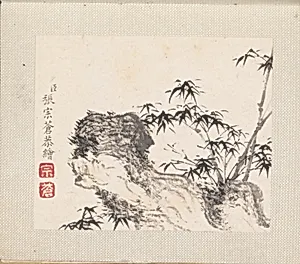
1686–1756
Zhang Zongcang (1686–1756), also known by his courtesy names Mocun and Mocen as well as sobriquets such as Huangcun and Taihu Yuren, was a distinguished Chinese landscape painter of the Qing dynasty, native to Wuxian (present-day Suzhou) in Jiangsu province. He studied under Huang Ding, a leading master of the Loudong school and the foremost pupil of the great Orthodox painter Wang Yuanqi. Working firmly in the Loudong school tradition, Zhang absorbed its emphasis on “li” (principle) and “qi” (vital energy), the disciplined study of ancient masters, and the fusion of scholarly character with pictorial form.
Before entering imperial service he held a modest official post as a clerk overseeing river works. His fortunes changed dramatically in 1751 during the Qianlong emperor’s first southern inspection tour, when the sixty-five-year-old artist presented an album of Sixteen Scenes of Wu Zhong. The emperor was so impressed that he summoned Zhang to the capital to serve in the Ruyi Guan painting academy, granting him the same stipend as first-rank court painters. In 1754 he received the additional title of secretary in the Ministry of Revenue; his disciples were likewise honored, an exceptional mark of imperial favor. After only a few years of intense productivity he retired because of illness and died the following year in his hometown.
Zhang specialized in monumental landscapes executed with a dry, vigorous brush. He built rock forms through accumulated dry strokes and light ink washes, combining energetic texture strokes with a sense of profound spatial recession and atmospheric depth. His style rejected the sweet, polished manner then common in the academy, restoring a scholarly austerity that Qianlong himself praised: “Others paint the method; Zongcang paints the principle.” The emperor ranked him with the Yuan masters Huang Gongwang and Ni Zan. More than 116 of his paintings were recorded in the imperial catalogue Shiqu Baoji, many bearing Qianlong’s own poetic inscriptions. Among the most celebrated is the handscroll New Autumn at the Wutong Studio, which includes a portrait of the emperor himself.
Zhang Zongcang’s brief but brilliant court career left an enduring mark on Qianlong-period painting. His works, once almost entirely reserved for the imperial collection, continue to be prized for their robust brushwork, intellectual rigor, and the rare personal rapport they reveal between a late-blooming Suzhou scholar-artist and one of China’s most discerning imperial patrons.