
日本 織部藤文筒向付 (19世紀前半)|Side Dish (Mukōzuke) with Wisteria Design
Unknown Artist
first half of the 19th century
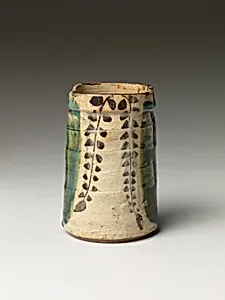
Medium
Stoneware with copper-green glaze and underglaze iron-oxide decoration (Mino ware, Oribe revival type)
Dimensions
H. 4 3/8 in. (11.1 cm)
Classification
Ceramics
Culture & Period
Japan · Edo period (1615–1868)
Department
Asian Art
Museum
Metropolitan Museum of Art, New York, NY
Credit
Gift of Mr. and Mrs. Samuel Colman, 1893
Accession Number
93.1.28
Rights
Public Domain
Art Historical Context
This elegant side dish, known as a *mukōzuke*, hails from Japan's Edo period (1615–1868), specifically the first half of the 19th century Crafted as Mino ware in the Oribe revival style, it features a delicate wisteria design rendered in underglaze iron-oxide evoking the cascading beauty of blooming vines—a motif symbolizing longevity and grace in Japanese culture. Measuring just 4⅜ inches high, its compact form was ideal for serving small delicacies alongside rice or soup in kaiseki meals, reflecting the refined aesthetics of everyday dining during a time of relative peace and prosperity. The dish's stoneware body is vividly coated in a copper-green glaze, a hallmark of Oribe ceramics originally pioneered in the early 17th century by tea master Furuta Oribe. This 19th-century revival captured the bold, asymmetrical exuberance of the original style, with its irregular drips and vibrant hues produced through sophisticated firing techniques in Mino kilns. Mino ware, from Japan's Gifu Prefecture, dominated ceramic production in the Edo era, blending functionality with artistic flair. A gift to the Metropolitan Museum of Art in 1893 from Mr. and Mrs. Samuel Colman, this piece exemplifies how Japanese pottery bridged utility and artistry, influencing global tastes in decorative arts. Visitors will appreciate its tactile allure and the subtle poetry of its wisteria blooms frozen in time.