
Man in Prayer
Rogier van der Weyden, ca. 1440
About this artwork
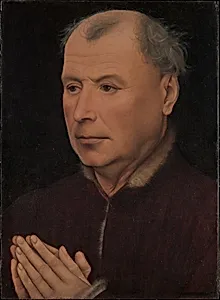
Rogier van der Weyden's *Man in Prayer*, created around 1440, exemplifies the Northern Renaissance mastery of the Flemish master. This intimate oil-on-wood portrait, measuring just 12½ x 9 inches, likely served as a private devotional image or donor portrait, common in 15th-century Northern Europe. Van der Weyden, a leading figure in the Early Netherlandish school alongside Jan van Eyck, was renowned for his profound emotional depth and hyper-realistic detail, capturing the spiritual intensity of religious life amid the era's growing devotion to personal piety. The painting's small scale and wood support highlight innovative oil techniques that allowed for luminous glazes, intricate textures in the man's robes, and a lifelike gaze that draws viewers into quiet contemplation. Van der Weyden's style blends meticulous observation with symbolic elements, such as the folded hands in prayer, evoking humility and connection to the divine—hallmarks of Burgundian court art. Housed in the Metropolitan Museum of Art through the bequest of Mary Stillman Harkness in 1950, this work offers a window into medieval devotion, reminding us how art bridged the earthly and eternal in the Renaissance North. Its serene power continues to inspire awe in modern visitors.