
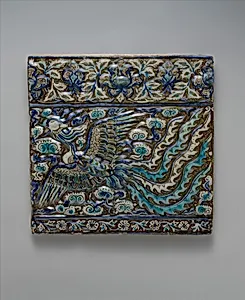
Tile with Image of Phoenix
Unknown Artist, late 13th century
About this artwork
Behold the striking *Tile with Image of Phoenix a masterpiece of late 13th-century Islamic from the Metropolitan Museum of Art's Islamic Art collection. Crafted by an artist using stonepaste—a fine, vitreous body developed in the Islamic world—this square tile measures about 15 inches across and vividly depicts a majestic phoenix, a mythical bird symbolizing rebirth and eternity. Acquired through the Rogers Fund in 2, it captures the era's innovative fusion of artistry and craftsmanship. The tile's medium is a marvel: modeled in relief, then underglaze painted in rich blues and turquoises, and finished with shimmering luster over an opaque white ground. This technique, perfected in 13th-century Persia and Syria amid the Ilkhanid Mongol patronage, allowed artisans to mimic Chinese porcelain while infusing Islamic motifs with metallic iridescence that dances in the light. Such tiles adorned mosques, palaces, and madrasas, transforming architecture into luminous storytelling. In Islamic culture, the phoenix evokes themes of renewal and divine mystery, blending pre-Islamic Persian lore with spiritual symbolism. This piece exemplifies the period's artistic traditions, where technical brilliance met profound iconography, inviting visitors to ponder the timeless allure of the eternal bird rising from its ashes.