
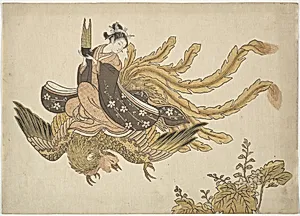
Young Woman Riding a Phoenix
Suzuki Harunobu, ca. 1766
About this artwork
Suzuki Harunobu's *Young Woman Riding a Phoenix* (ca. 1766) is a captivating woodblock print from Japan's Edo period (16151868), showcasing the artist's pioneering role in ukiyo-e, or "pictures of the floating." This horizontal chūban format—measuring about 8 by 11 inches—was ideal for intimate viewing, with vibrant ink and color on paper achieved through the innovative nishiki-e, Harunobu's breakthrough in full-color printing around 1765. As one of the first masters to produce such multicolored works, he elevated the medium from black-and-white benizuri-e to richly layered brocade-like images, blending technical precision with poetic elegance. The print depicts a graceful young woman astride a majestic phoenix, a mythical bird symbolizing virtue, renewal, and imperial grace in Japanese lore. Harunobu, renowned for his bijin-ga (images of beautiful women), infuses the fantastical scene with serene beauty and subtle eroticism, reflecting Edo urban culture's fascination with femininity, fantasy, and the ephemeral pleasures of life. Produced amid Tokyo's (then Edo) booming print industry, it captures the era's aesthetic refinement and social vibrancy. Housed in the Metropolitan Museum of Art's Asian Art collection since 1936, this piece from The Howard Mansfield Collection preserves Harunobu's legacy, inviting visitors to ponder the interplay of myth and mortality in 18th-century Japan.