
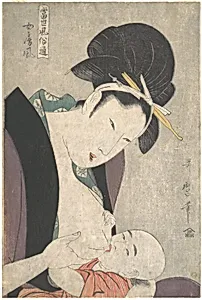
当世風俗通 女房風|Mother and Child
Kitagawa Utamaro, ca. 1790
About this artwork
In the bustling world of Edo-period Japan (1615–8), Kitagawa Utaro captured the quiet poetry of everyday life with this woodblock print, *Mother and Child* (ca. 1790). Titled *当世風俗通 女房風* in, it portrays an intimate domestic moment between a mother and her infant, rendered in ink and color on paper. Measuring about 15 by 10 inches, this ukiyo-e print—meaning "pictures of the floating world"—reflects the era's fascination with fleeting pleasures and human connections amid urban prosperity. Utamaro, a master of bijin-ga or "pictures of beautiful women," excelled in elegant, slender figures with refined linework and large, expressive heads. Here, his sensitivity shines in the tender embrace, part of a series celebrating maternal love that defined his late-18th-century output. The collaborative woodblock process—designing, carving, and printing—produced vibrant colors and subtle textures, showcasing technical brilliance. Utamaro's evocative motherhood scenes profoundly influenced the West; American Impressionist Mary Cassatt adored his prints, declaring them "more beautiful" than imaginable. This Rogers Fund acquisition at the Metropolitan Museum of Art invites us to appreciate how one artist's grace bridged cultures and centuries.