
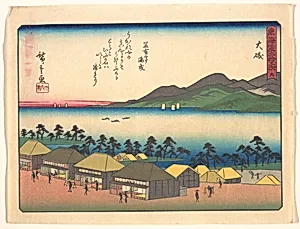
東海道五十三次 大磯
early 20th century
Medium
Woodblock print; ink and color on paper
Dimensions
7 x 9 in. (17.8 x 22.9 cm)
Classification
Prints
Culture
Japan
Department
Asian Art
Museum
Metropolitan Museum of Art, New York, NY
Credit
Gift of Cole J. Younger, 1975
Accession Number
JP3449
Rights
Public Domain
Tags
Art Historical Context
Utagawa Hiroshige's *The Fifty-three Stations of Tōkaidō: Ōiso* is a captivating woodblock print from the renowned Tōkaidō series, first created in the 1830s during Japan's Edo period. This early 20th-century edition the Ōiso station, one of 53 post towns along the vital Tōkaidō road Edo (modern Tokyo) Kyoto. Travelers, samurai, and merchants traversed this route, making it a cultural lifeline that Hiroshige immortalized through his keen eye for everyday journeys and natural splendor. Rendered in vibrant inks and colors on paper, the print measures a intimate 7 x 9 inches, showcasing Hiroshige's ukiyo-e style—known for its atmospheric landscapes, dynamic compositions, and subtle gradations achieved through meticulous woodblock carving and printing techniques. Expect sweeping views of mountains, rivers, and coastal vistas tagged to this work, evoking the serene yet bustling energy of rural Japan. As a cornerstone of Japanese printmaking, Hiroshige's series revolutionized landscape art, influencing global artists like Van Gogh and Whistler. Housed in the Metropolitan Museum of Art's Asian Art collection, this gift from Cole J. Younger in 1975 invites visitors to ponder the enduring allure of travel and nature in Japanese culture.
About the Artist
Utagawa Hiroshige · 1826–1869
Utagawa Hiroshige (1797–1858), born Andō Tokutarō, was the last great master of Japanese ukiyo-e woodblock printmaking and one of the most influential landscape artists in history. Born in Edo (modern Tokyo) into a low-ranking samurai family serving as fire wardens, Hiroshige transformed landscape printmaking into a poetic meditation on nature, weather, and everyday life. His revolutionary approac...