
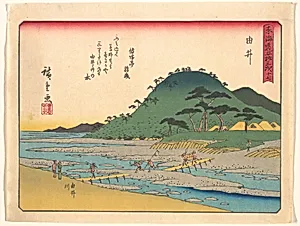
東海道五十三次 由井
early 20th century
Medium
Woodblock print; ink and color on paper
Dimensions
7 x 9 in. (17.8 x 22.9 cm)
Classification
Prints
Culture
Japan
Department
Asian Art
Museum
Metropolitan Museum of Art, New York, NY
Credit
Gift of Cole J. Younger, 1975
Accession Number
JP3457
Rights
Public Domain
Tags
Art Historical Context
**Tōkaidō Gojūsan-tsugi: Yui** by Utagawa Hiroshige captures a serene moment along Japan's historic Tōkaidō road, one of the five main routes connecting Edo (modern Tokyo) to Kyoto during the Edo period (1603–1868). This woodblock print depicts the Yui station, the 27th stop on the journey, surrounded by lush hills, winding streams, and sturdy bridges—elements that evoke the rugged beauty of coastal landscapes. Hiroshige, a master of the ukiyo-e tradition, first published this iconic series in 1833–34, revolutionizing landscape art by emphasizing atmospheric mood over precise realism. Printed in the early 20th century as ink and color on paper (7 x 9 in.), this intimate ōban-sized work showcases Hiroshige's genius in woodblock techniques: subtle gradations of color (bokashi) mimic misty skies and flowing water, while bold lines define natural forms. Part of the Metropolitan Museum of Art's Asian Art collection (gift of Cole J. Younger, 1975), it reflects Japan's vibrant print culture, where such images served travelers, collectors, and everyday admirers, blending poetry with topography. These prints not only documented pilgrimage routes but also immortalized fleeting seasonal beauty, influencing global artists like Van Gogh and Whistler. Stroll virtually through Yui's timeless vistas and feel the pull of Japan's ancient highways!
About the Artist
Utagawa Hiroshige · 1826–1869
Utagawa Hiroshige (1797–1858), born Andō Tokutarō, was the last great master of Japanese ukiyo-e woodblock printmaking and one of the most influential landscape artists in history. Born in Edo (modern Tokyo) into a low-ranking samurai family serving as fire wardens, Hiroshige transformed landscape printmaking into a poetic meditation on nature, weather, and everyday life. His revolutionary approac...