
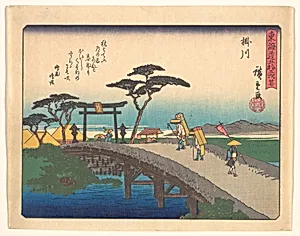
東海道五十三次 掛川
early 20th century
Medium
Woodblock print; ink and color on paper
Dimensions
7 x 9 in. (17.8 x 22.9 cm)
Classification
Prints
Culture
Japan
Department
Asian Art
Museum
Metropolitan Museum of Art, New York, NY
Credit
Gift of Cole J. Younger, 1975
Accession Number
JP3467
Rights
Public Domain
Tags
Art Historical Context
Welcome to the Metropolitan Museum of Art's Asian Art collection! This woodblock print, *Tōkaidō Gojūsan-tsugi: Kake* (The Fifty-three Stations of theōkaidō: Kakegawa), is a later edition from the early 20th century, reproducing the iconic design of Utagawa Hiroshige1797–1858). Hiroshige, a master of the ukiyo-e ("pictures of the floating world") tradition, created his original series in the 1830s, capturing the bustling post stations along the historic Tōkaidō highway—the vital route connecting Edo (modern Tokyo) to Kyoto during Japan's Edo period (1603–1868). These prints celebrated everyday travel, landscapes, and human activity, making grand journeys accessible to urban audiences. In this intimate 7 x 9-inch scene, Hiroshige evokes Kakegawa station with graceful bridges arching over a river, lush trees framing the composition, and clusters of human figures—likely travelers and porters—adding life and narrative energy. The woodblock technique shines here: intricate carving on wooden blocks allowed for vibrant inks and colors layered on paper, producing subtle gradients and atmospheric depth that convey misty weather and seasonal beauty, hallmarks of Hiroshige's poetic style. A gift from Cole J. Younger in 1975, this print highlights the enduring appeal of Hiroshige's work, which influenced global artists like Van Gogh and Whistler. It offers a window into Japan's cultural fascination with nature, mobility, and the transient beauty of life.
About the Artist
Utagawa Hiroshige · 1826–1869
Utagawa Hiroshige (1797–1858), born Andō Tokutarō, was the last great master of Japanese ukiyo-e woodblock printmaking and one of the most influential landscape artists in history. Born in Edo (modern Tokyo) into a low-ranking samurai family serving as fire wardens, Hiroshige transformed landscape printmaking into a poetic meditation on nature, weather, and everyday life. His revolutionary approac...