
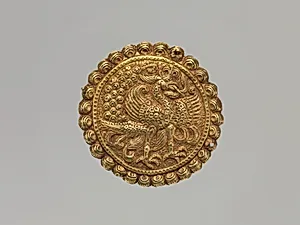
Plaque with Phoenix
Unknown Artist, 7th–9th century
About this artwork
This exquisite gold plaque, featuring a phoenix, dates to the 7th–9th century from China's Xinjiang Autonomous Region in Central Asia, during the Period of Tibetan Empire. Measuring just 2¾ inches in diameter, small yet striking piece of metalwork likely served as jewelry or a decorative ornament, showcasing the era's mastery of precious materials. Crafted at a cultural crossroads where Chinese, Tibetan, and Central Asian influences, it reflects the vibrant exchange of ideas along ancient Silk Road trade routes. The phoenix, mythical creature symbolizing rebirth virtue, and imperial grace in Chinese lore, underscores the plaque's ties to spiritual and auspicious themes. Gold's luster and durability made it ideal for objects denoting wealth, status, and devotion, demanding skilled techniques like hammering, chasing, and polishing—hallmarks of specialized workshops. Such artifacts highlight how artisans encoded cultural values through shared iconography, bridging elite patrons and everyday admirers. Preserved at The Metropolitan Museum of Art through the Vincent Astor Foundation's generosity, this plaque offers a window into a dynamic historical moment, revealing technical prowess and the timeless allure of mythical motifs that transcended borders.