
The thundering skeleton of the modern bells
José Guadalupe Posada, 1905
About this artwork
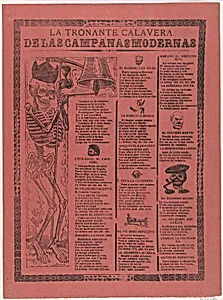
In the heart of Mexico City's bustling Zócalo stands the Metropolitan Cathedral, and in 1905, its tower gained new "modern bells" and a clock that chimed with thunderous authority. José Guadalupe Posada captured this moment in his satirical zincograph and letterpress print, *The Thundering Skeleton of the Modern Bells*, published by Antonio Vanegas Arroyo. A dancing skeleton dominates the vibrant orange paper, boldly outlined in Posada's signature expressive linework, as it scolds tradespeople and professionals for their misdeeds—demanding they mend their ways through witty verses. This calavera, or "skeleton" broadside, exemplifies the popular Mexican tradition of mocking the powerful during Day of the Dead festivities. Posada, a master of the penny press, blended indigenous imagery with European zincography—a relief printing technique on metal plates—and letterpress typography to make art affordable and accessible to working-class audiences. His thousands of prints tackled social issues with sharp satire, turning everyday gripes into cultural touchstones. Today, Posada's skeletal motifs echo in Día de los Muertos celebrations worldwide and inspired the Mexican Muralism movement. At 15 13/16 × 11 13/16 inches, this striking piece from The Metropolitan Museum of Art's Elisha Whittelsey Collection invites us to laugh at our flaws, much as it did over a century ago.