
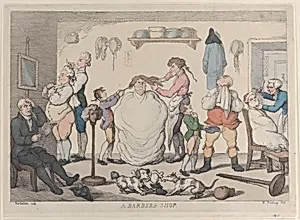
A Barber's Shop
Medium
Hand-colored etching
Dimensions
Sheet (inlaid): 10 1/16 × 13 7/8 in. (25.5 × 35.2 cm)
Classification
Prints
Department
Drawings and Prints
Museum
Metropolitan Museum of Art, New York, NY
Credit
The Elisha Whittelsey Collection, The Elisha Whittelsey Fund, 1959
Accession Number
59.533.869
Rights
Public Domain
Tags
Art Historical Context
Step into the lively world of early 19th-century British satire with *A Barber's Shop (1811), a hand etching created by master caricaturist Thomas Rowlandson after design by Henry William Bun. This print captures a chaotic barber shop scene teeming with exaggerated male figures—likely poking fun at the pretensions, follies, and everyday absurdities of Regency gentlemen amid their grooming rituals. Measuring 10 1/16 × 13 7/8 inches, it's a gem from the Metropolitan Museum of Art's Elisha Whittelsey Collection. Rowlandson, a leading figure in London's printmaking scene during the Georgian era's satirical boom, excelled in hand-colored etchings that brought humor to the masses through affordable, vibrant reproductions. Bunbury's whimsical designs paired perfectly with Rowlandson's dynamic linework and bold colors, amplifying the comic exaggeration typical of the caricature movement. Published amid social upheavals like the Napoleonic Wars, such prints offered lighthearted escapism while slyly critiquing class, fashion, and masculinity. This artwork exemplifies how prints democratized art, turning elite satire into popular entertainment sold at shops like those on London's St. James's Street. Its enduring charm lies in Rowlandson's masterful balance of detail and slapstick, inviting viewers to chuckle at timeless human vanities.