
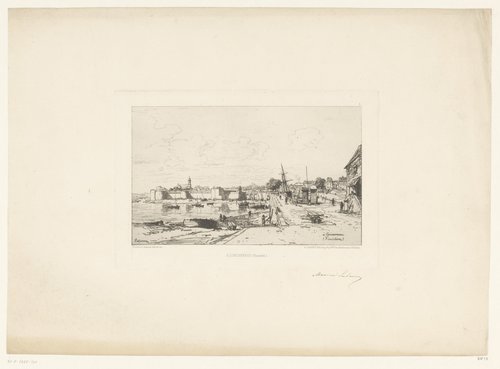
À Concarneau (Finistère)
Medium
etching
Dimensions
160; 237
Rights
Public Domain
About this artwork
height 160 mm x width 237 mm
Art Historical Context
**À Concarneau (Finist)**, etched by Maxime François Antoine Lalanne in 1874, the rugged beauty of Concarneau, a historic fishing port in Brittany's Finistère region. Lalanne, a prominent 19th-century French artist renowned for his precise etchings of landscapes and architecture, likely drew inspiration from the area's medieval walled ville close and bustling harbor during his travels. This intimate plate, measuring just 160 mm high by 237 mm wide, reflects the era's fascination with regional French scenery amid post-Franco-Prussian War recovery, when artists sought solace in nature's authenticity. As an etching, the work showcases Lalanne's mastery of intaglio printmaking, where a needle scratches lines into a wax-coated copper plate, and acid etches the grooves for inking and printing. This technique allowed for delicate tonal variations and intricate details, making etchings prized for their affordability and reproducibility compared to paintings. Lalanne's style aligns with the etching revival of the 1860s-70s, bridging Realism's fidelity to observation with a poetic touch. For visitors, this piece offers a window into Brittany's cultural heritage—a hub of Celtic traditions and maritime life—preserved in a portable, gem-like format. Its modest scale invites close contemplation, revealing the artist's skill in evoking atmosphere through line alone. (198 words)