
A Dandy Fainting
published December 11, 1818
Medium
Hand-colored etching on paper
Dimensions
Image: 24.1 × 34.5 cm (9 1/2 × 13 5/8 in.); Plate: 25 × 35.3 cm (9 7/8 × 13 15/16 in.); Sheet: 25.6 × 35.8 cm (10 1/8 × 14 1/8 in.)
Classification
etching
Department
Prints and Drawings
Museum
Art Institute of Chicago
Accession Number
89776
Rights
Public Domain
Art Historical Context
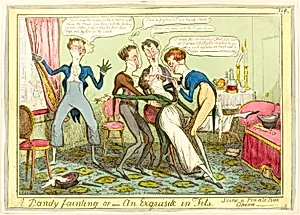
Isaac Robert Cruikshank’s “A Dandy Fainting,” published on December 11, 1818, offers a witty glimpse into Regency-era London society. As a hand-colored etching on paper, the print belongs to a vibrant tradition of British caricature that flourished in the early nineteenth century. Cruikshank, like his better-known brother George, specialized in sharp social satire, using the accessible medium of etching to reach a broad audience through print shops and circulating libraries. The scene lampoons the fashionable “dandy,” a type of overly refined gentleman whose pursuit of elegance often bordered on the absurd. By depicting such a figure in a moment of exaggerated collapse, Cruikshank gently mocks the affectations of high fashion and the rigid social codes of the day. The hand-coloring adds lively detail—bright waistcoats, flushed cheeks, and fluttering handkerchiefs—that heightens the comic effect while showcasing the technical skill of the printmaker’s studio. Today housed in the Art Institute of Chicago’s collection of prints and drawings, the work reminds viewers how popular graphic art once shaped public conversation about class, gender, and taste. Its modest size and affordable format made satire available to anyone who could spare a shilling, ensuring that even fleeting social follies were preserved for posterity.