
A Deathbed Scene
Medium
Pen and brown ink, brush and brown wash, over traces of black chalk on light tan paper. Squared in black chalk
Dimensions
5-11/16 x 6-1/8 in. (14.4 x 15.5 cm)
Classification
Drawings
Department
Drawings and Prints
Museum
Metropolitan Museum of Art, New York, NY
Credit
Gift of Cephas G. Thompson, 1887
Accession Number
87.12.45
Rights
Public Domain
Tags
Art Historical Context
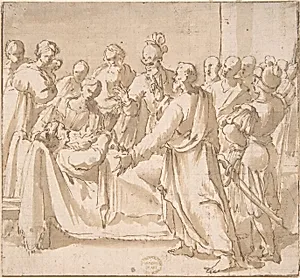
In the hushed intimacy of the Metropolitan Museum of's Drawings and Prints department lies *A Deathbed Scene*, poignant 17th-century work by an anonymous Italian artist from the Roman-Bolog school. Crafted on light tan paper with pen and brown ink, brush brown wash over faint black chalk traces, this small drawing (5-11/16 x 6-1/8 in.) captures a moment of profound human vulnerability. Squared in black chalk, it hints at its role as a preparatory study, likely up for a larger painting or fresco common practice in Baroque workshops. Emerging from Bologna and Rome's vibrant artistic circles, influenced by masters like the Carracci brothers, this piece reflects the 17th-century Baroque fascination with emotional intensity and mortality. Deathbed scenes were emblematic of the era's *ars moriendi* tradition, urging viewers to contemplate suffering, death, and spiritual redemption amid the Catholic Counter-Reformation. The artist's masterful use of ink lines for crisp figures and wash for shadowy depth evokes empathy, drawing us into the bedside drama of human figures in anguish. A gift to the Met in 1887 from Cephas G. Thompson, this anonymous gem offers a window into the preparatory artistry that fueled Italy's grand canvases, reminding us of art's power to humanize life's final moments.