
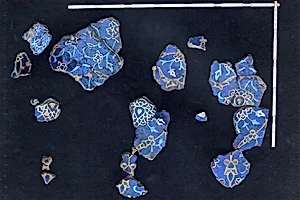
A Group of Mosaic Tilework Fragments
Unknown Artist
last quarter 15th century
Medium
Stonepaste; polychrome glazed tiles, set into clay
Dimensions
Tiles are currently being housed in 20 trays. Footprint of trays is approximately 94" x 37" x 24".
Classification
Ceramics-Tiles
Department
Islamic Art
Museum
Metropolitan Museum of Art, New York, NY
Credit
Rogers Fund, 1907
Accession Number
07.270.1–.166
Rights
Public Domain
Art Historical Context
### A Group of Mosaic Tile Fragments Behold this captivating collection of mosaic tilework fragments from the quarter of the 15 century, housed in 20 trays at the Metropolitan Museum of Art's Islamic Art department. Crafted from stonepaste—a refined ceramic body developed in the Islamic world—these polychrome glazed tiles set into clay, once adorned grand architectural surfaces. Acquired through the Rogers Fund in 7, they offer a tangible glimpse into the opulent decorative traditions of the late medieval Islamic realm. Stonepaste tiles represented a pinnacle of technical innovation, enabling artisans to achieve vibrant, durable glazes in blues, turquoise, yellows, and greens that shimmered under sunlight. Mosaic techniques involved cutting and assembling small glazed pieces into intricate geometric patterns, arabesques, and floral motifs—hallmarks of Islamic art that symbolized paradise gardens and cosmic order, while adhering to aniconic principles avoiding human figures. These fragments evoke the splendor of 15th-century mosques, palaces, and madrasas across Persia, the Ottoman Empire, or Mamluk domains. Though their exact provenance remains unknown, they highlight the era's mastery of color and pattern, inviting visitors to ponder the hands that shaped them and the walls they once transformed into living artworks. A testament to enduring cultural brilliance! (198 words)