
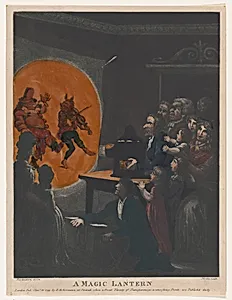
A Magic Lantern
January 30, 1799
Medium
Hand-colored etching and aquatint
Dimensions
Sheet: 13 3/16 × 10 1/16 in. (33.5 × 25.5 cm)
Classification
Prints
Department
Drawings and Prints
Museum
Metropolitan Museum of Art, New York, NY
Credit
The Elisha Whittelsey Collection, The Elisha Whittelsey Fund, 1959
Accession Number
59.533.656
Rights
Public Domain
Tags
Art Historical Context
Step into the lively world of late 18th-century London with *A Magic Lantern* (1799), a hand-colored and aquatint by caricaturist Thomas Rowlandson, in collaboration with engraver Henrike and publisher Rudolph Ack. This spirited print captures a bustling magic lantern show, surrounded by an eager crowd of girls, men, and women spectators, their faces illuminated by the flickering light of the early projector-like device. Measuring 13 3/16 × 10 1/16 inches, it exemplifies the satirical humor Rowland was renowned for during the Georgian era. Magic lanterns—precursors to modern slide projectors—were all the rage as affordable entertainments, projecting painted glass slides to tell stories, display wonders, or amuse audiences in taverns and homes. Rowlandson's print pokes gentle fun at this novelty, highlighting the mix of wonder and everyday revelry in Regency society. Ackermann's innovative publishing house elevated such works through high-quality reproductions, making caricature accessible to a wide public. The medium shines here: etching provides crisp lines for expressive figures, while aquatint adds rich tonal depth to shadows and glows, brought vividly to life by meticulous hand-coloring. From The Metropolitan Museum of Art's Elisha Whittelsey Collection, this piece offers a window into print culture's golden age, blending artistry with social observation. (198 words)
About the Artist
Thomas Rowlandson|Henri Merke|Rudolph Ackermann, London · 1756–1827
Thomas Rowlandson (1757–1827) was an English artist and caricaturist whose satirical watercolors and prints captured the social life of Georgian Britain with unparalleled wit and technical mastery. Alongside James Gillray, he is recognized as one of the greatest British graphic artists, and his distinctive flowing line and keen observations have made his work integral to understanding late 18th an...