
A Parody of Hachi no ki
Medium
Color woodblock prints; oban triptych
Dimensions
Right sheet: 36.7 × 25.4 cm (14 1/2 × 10 in.); Center sheet: 36.7 × 25.4 cm (14 1/2 × 10 in.); Left sheet: 36.5 × 25.6 cm (14 3/8 × 10 1/8 in.)
Classification
woodblock print
Department
Arts of Asia
Museum
Art Institute of Chicago
Accession Number
21657
Rights
Public Domain
Art Historical Context
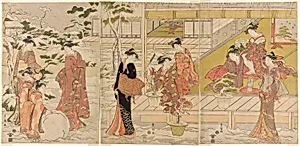
Utagawa Toyokuni I (1769–1825), a master of the Ukiyo-e school during Japan's Edo period, created *A Parody of H no ki*, a vibrant color woodblock print in the grand oban triptych format. Comprising three sheets—each around 36.7 × 25.4 cm—this medium allowed for expansive, theatrical compositions that captured the energy of Kabuki theater, a cornerstone of popular culture. Toyokuni was renowned for his yakusha-e (actor prints), vividly portraying performers in dramatic roles with expressive faces, flowing robes, and dynamic poses. The title references *Hachi no ki* (The Well of the Eight Plates), a famous scene from the ghost story Kabuki play *Yotsuya Kaidan* by Tsuruya Nanboku IV, known for its chilling tale of betrayal and supernatural revenge. As a parody, or *mitate*, Toyokuni playfully subverts the original's horror with humor, exaggeration, or contemporary twists—a common Ukiyo-e trope that made high art accessible and entertaining to urban audiences. The intricate woodblock technique, involving multiple carved blocks for layering vivid colors and fine lines, highlights the precision of Edo printmakers. Housed in the Art Institute of Chicago's Arts of Asia department, this undated work exemplifies how Ukiyo-e bridged theater and visual art, preserving fleeting performances for mass enjoyment and influencing global aesthetics, from Impressionism to modern design. A delightful glimpse into Japan's "floating world" of wit and spectacle!
About the Artist
Utagawa Toyokuni I · 1777–1835
Japanese, 1777–1835