
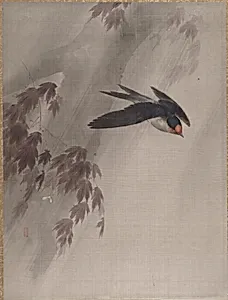
A Swallow in the Rain
ca. 1891–92
Medium
Album leaf; ink and color on silk
Dimensions
14 5/8 x 11 in. (37.1 x 27.9 cm)
Classification
Paintings
Culture & Period
Japan · Meiji period (1868–1912)
Department
Asian Art
Museum
Metropolitan Museum of Art, New York, NY
Credit
Charles Stewart Smith Collection, Gift of Mrs. Charles Stewart Smith, Charles Stewart Smith Jr., and Howard Caswell Smith, in memory of Charles Stewart Smith, 1914
Accession Number
14.76.61.72
Rights
Public Domain
Tags
Art Historical Context
In the bustling Meiji period (1868–1912), when Japan rapidly modernized under Western influences, artists like Okada Baison preserved cherished traditions of ink painting. Created around 1891–92, *A Swallow in the Rain* is a delicate album leaf in ink and on silk, measuring 14⅝ × 11 inches. This intimate format—small pages bound into albums for private contemplation—was a hallmark of literati painting (nanga or bunjinga), emphasizing poetic expression over rigid realism. Baison, a master of this Southern school style inspired by Chinese literati, captures a lone swallow enduring a downpour, evoking themes of resilience and the fleeting beauty of nature. The use of ink and subtle color on silk highlights Baison's skillful wash techniques, where layered tones create depth and atmosphere on the luxurious, luminous fabric. Silk's absorbency allows for soft, diffused edges, mimicking mist and raindrops, while the bird's precise contours showcase meticulous brushwork. Album leaves like this were prized collectibles among scholars and elites, often traded or admired in social gatherings. Housed in the Metropolitan Museum of Art's Asian Art collection since 1914, this work bridges Japan's artistic heritage with its transformative era, reminding visitors of enduring harmony between humanity and the natural world. A perfect gem for bird lovers and poetry enthusiasts alike!