
千羽鶴折形; 秘伝千羽鶴折形|A Thousand Cranes and How to Fold Them (Senbazuru orikata) 千羽鶴折形; 秘伝千羽鶴折形
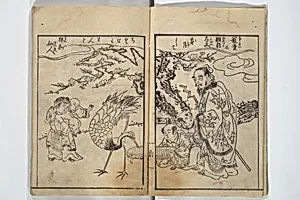
Medium
Woodblock printed book; ink on paper
Dimensions
6 1/4 × 4 5/16 in. (15.8 × 11 cm)
Classification
Illustrated Books
Culture & Period
Japan · Edo period (1615–1868)
Department
Asian Art
Museum
Metropolitan Museum of Art, New York, NY
Credit
Purchase, Mary and James G. Wallach Foundation Gift, 2013
Accession Number
2013.824
Rights
Public Domain
Tags
Art Historical Context
Step into the intricate world of Edo-period Japan with *A Thousand Cranes and to Fold Them (Senuru orikata)*, a delightful 1797 woodblock-printed by Shimokōbe Shūsui. This compact treasure, measuring just 6¼ × 4⅜ inches, serves as a step-by-step guide to origami, focusing on the elegant crane—a timeless symbol of longevity, fidelity, and good fortune in Japanese culture.id illustrations of cranes, boys, men, and flowers bring the instructions to life, blending artistry with practical instruction in a format typical of the era's popular printed books. Produced during the Edo period (1615–1868), when woodblock printing flourished as an accessible medium for sharing knowledge, this work exemplifies the fusion of ukiyo-e aesthetics and everyday craft. Shūsui's precise ink-on-paper designs capture the delicate folds required for *senbazuru*—stringing together 1,000 cranes—a tradition believed to grant wishes for health and peace. The title's reference to a "secret transmission" hints at esoteric knowledge passed among origami enthusiasts. Today, housed in the Metropolitan Museum of Art's Asian Art Department, this book reminds us of origami's roots as both art and ritual. Visitors might try folding their own crane, evoking centuries-old hopes strung in paper.