
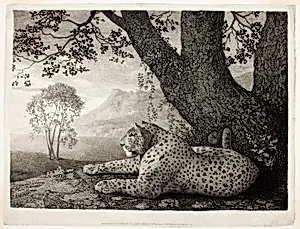
A Tyger (A Recumbent Leopard by a Tree)
George Stubbs, May 1, 1788
About this artwork
George Stubbs, a pioneering British artist renowned for his meticulous depictions of animals, created *A Tyger (A Recumbent Leopard by a Tree in 1788. This etching a recumbent leopard poised gracefully beside a tree, showcasing Stubbs' signature anatomical precision and lifelike realism. At the time, exotic animals like leopards were symbols of the wild and the expanding British Empire, often featured in art to evoke wonder and scientific curiosity. Printed using etching with roulette—a technique that employs a textured wheel to produce fine, velvety lines on off-white wove paper—this work exemplifies Stubbs' innovative printmaking. Etching allowed for detailed reproductions of his oil paintings, making his studies accessible to a wider audience of collectors and naturalists. Measuring about 10 by 13 inches, the sheet balances intimate scale with dramatic presence, highlighting the leopard's sleek form and alert gaze. Housed in the Art Institute of Chicago's Prints and Drawings Department, this piece reflects Stubbs' lifelong fascination with animal anatomy, informed by his dissections and engravings. It invites visitors to appreciate the blend of artistry and science in 18th-century natural history illustration.